Building AI-Driven DeFi Hack Visualization Systems in 2026
Learn how to turn DeFi hack data into automated visual explainers using on-chain monitoring, AI video tools, and diagram systems in 2026.
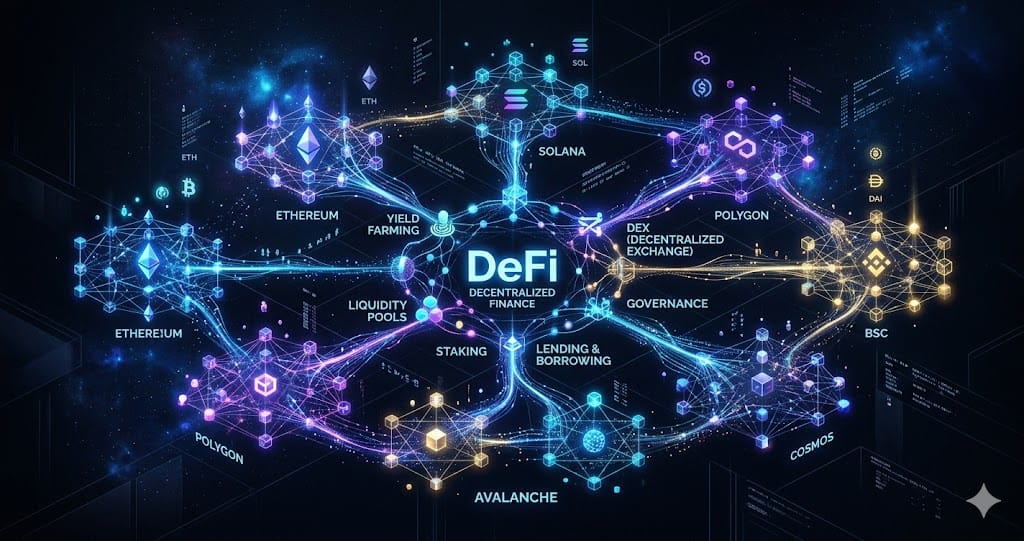
$3.4 billion was lost to crypto hacks in 2025, with a large share driven by repeatable attack patterns like flash loans and private key compromises. At the same time, most available content remains text-heavy, leaving a clear gap between raw exploit data and visual understanding.
A structured system can convert on-chain monitoring data into repeatable visual outputs. By combining real-time detection, classification, and AI-driven rendering, each exploit can be transformed into diagrams and videos that explain exactly how funds were extracted at the transaction level.
In This Guide
Step-by-Step Guide
Establish a structured on-chain data pipeline
Set up ingestion from real-time monitoring platforms such as Forta Network and analytics sources like DefiLlama. These sources provide raw exploit data including transaction hashes, affected contracts, and exploit timestamps.
Store this data in a structured format such as JSON or a time-series database. Normalize key fields such as attack type, protocol name, and funds lost. This ensures consistency when converting incidents into visual outputs and allows automated processing without manual cleanup.
Classify exploits into standardized attack types
Map each incident into a predefined taxonomy such as reentrancy, flash loan, oracle manipulation, integer overflow, or private key compromise. This classification determines how the exploit will be visually represented.
For example, flash loans require multi-step transaction flows, while reentrancy requires recursive loop visualization. Assign each category a fixed visual template so new incidents can be processed automatically without redesigning the structure each time.
Convert exploit data into diagram logic
Use tools like Mermaid.js or D3.js to transform structured exploit data into diagrams. Each transaction becomes a node, and each interaction becomes a directional flow.
Maintain strict mapping between on-chain data and visual elements. For example, a token transfer must correspond to a labeled arrow, while a contract call must be represented as a distinct interaction layer. This ensures technical accuracy and reproducibility across all visuals.
Generate AI-based visual and video assets
Use AI video tools such as OpenAI Sora, Runway Gen-4.5, and Pika to create motion-based explainers. These tools can simulate transaction flows, fund movement, and exploit sequences.
Combine AI-generated visuals with programmatic diagrams to balance realism and precision. While AI handles environment, lighting, and motion, the diagram layer ensures the technical sequence remains accurate and verifiable.
Automate content generation and distribution
Build a pipeline that processes new exploit data end-to-end. Each cycle should ingest new incidents, classify the attack, generate diagrams, create visuals, and export final video assets.
Top creators now produce 200–300 videos monthly using similar automation workflows. Meanwhile, consistency in format—same structure, same visual language—reduces production time and allows scaling across multiple attack types without loss of quality.
Tips and Best Practices
- Always test with small amounts before committing significant funds.
- Bookmark the official websites of tools mentioned in this guide to avoid phishing.
- Keep detailed records of your transactions for tax reporting purposes.
Ready to start trading?
Trade on Bitget Try CoinTech2uAffiliate links — we may earn a commission at no extra cost to you.
Frequently Asked Questions
Which attack types should be prioritized first?
Focus on flash loan and reentrancy attacks due to their high complexity and repeatable visual patterns.
Why not rely solely on AI for diagrams?
AI tools lack deterministic precision, which is required to accurately represent transaction-level exploit flows.
How often should the system update content?
Weekly updates are optimal, aligning with new exploit disclosures and maintaining relevance with current attack trends.