Bitcoin vs Solana 2026: Store of Value vs High-Speed Utility
Bitcoin vs Solana Digital gold versus the fastest smart contract blockchain — two fundamentally different crypto visions Bitcoin and Solana represent two fundamentally different philosophies in cryptocurrency.
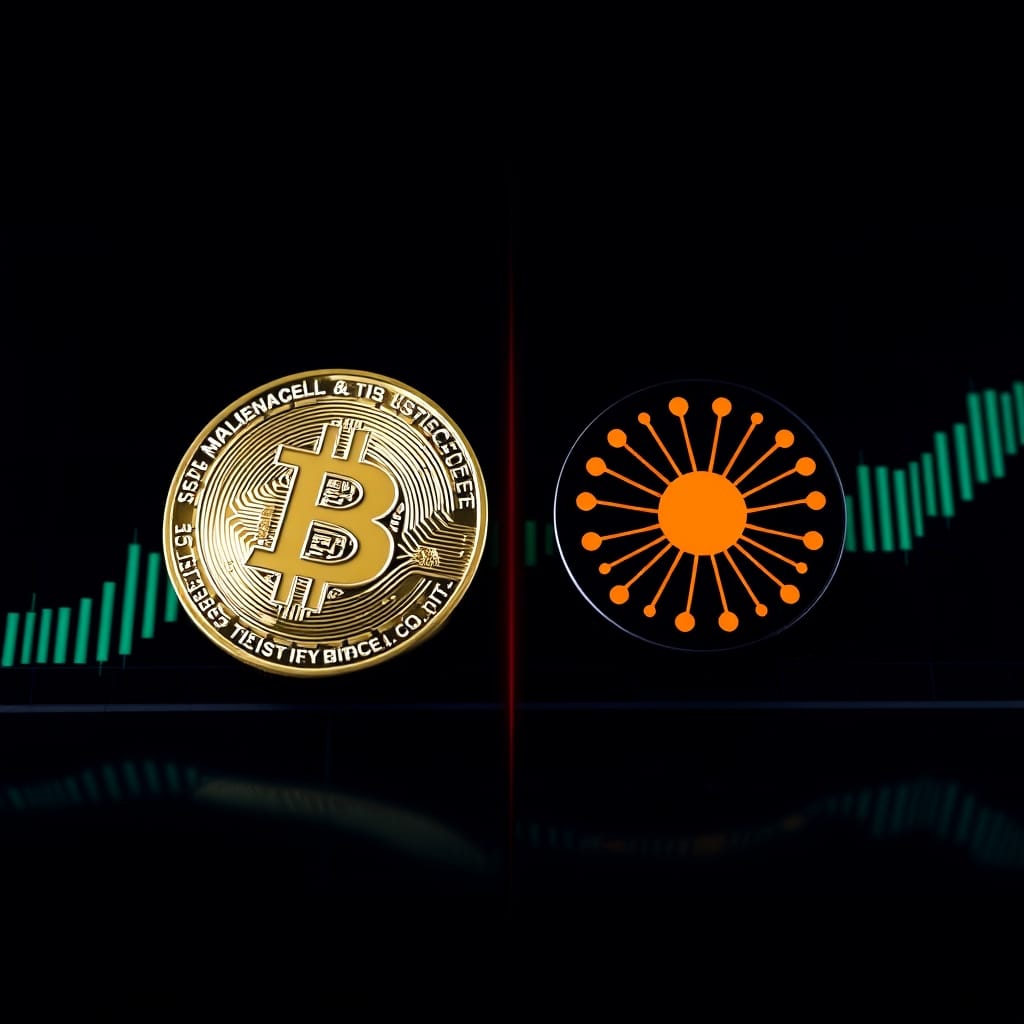
Bitcoin vs Solana
Digital gold versus the fastest smart contract blockchain — two fundamentally different crypto visions
Bitcoin and Solana represent two fundamentally different philosophies in cryptocurrency. Bitcoin prioritizes security, decentralization, and monetary scarcity above all else, positioning itself as digital gold and a long-term store of value. Solana prioritizes speed, low cost, and programmability, building a platform for decentralized applications, DeFi, and consumer-facing crypto products.
Comparing them is not about which is technically superior but rather about which investment thesis and use case resonates with your goals. Many portfolios include both assets precisely because they serve different functions in the crypto ecosystem. This comparison examines the strengths of each approach to help you allocate capital thoughtfully.
Quick Comparison
| Feature | Bitcoin (BTC) | Solana (SOL) |
|---|---|---|
| Primary Use Case | Store of value, digital gold | Smart contracts, DeFi, consumer apps |
| Max Supply | 21 million (fixed forever) | No hard cap (inflationary with burn) |
| Consensus | Proof of Work | Proof of Stake + Proof of History |
| Transaction Speed | ~10 min (block time) | ~400ms finality |
| Transaction Cost | $1-5 (varies with demand) | $0.001 - $0.01 |
| Smart Contracts | Limited (Script, Ordinals, BitVM emerging) | Full Turing-complete (Rust/SVM) |
| Market Cap Rank | #1 | #5-6 |
| Institutional Adoption | Spot ETFs, sovereign reserves, corporate treasuries | Growing ETF filings, DeFi institutional use |
Bitcoin Overview
Bitcoin is the original cryptocurrency and remains the dominant digital asset by market capitalization, network security, and institutional adoption. Its fixed supply of 21 million coins, secured by the world's largest proof-of-work mining network, creates a verifiable digital scarcity that has attracted sovereign wealth funds, corporate treasuries, and spot ETFs managing hundreds of billions in assets.
Bitcoin's deliberate simplicity is its greatest strength. By resisting the complexity of smart contract platforms, it minimizes attack surface and maintains the strongest security guarantees in crypto. The Lightning Network provides a layer-2 payment solution for faster transactions, and emerging technologies like Ordinals and BitVM are expanding Bitcoin's programmability without compromising the base layer's security model.
✅ Pros
- Fixed 21 million supply creates mathematically guaranteed scarcity unmatched by any other asset
- Largest and most secure blockchain network protected by massive proof-of-work hash power
- Deepest institutional adoption with spot ETFs, sovereign reserves, and corporate treasury allocations
- Longest track record of any cryptocurrency with 17 years of continuous operation
- Regulatory clarity as a commodity in most jurisdictions reduces compliance risk for investors
❌ Cons
- Slow transaction speed and high fees on the base layer limit payment utility
- Proof of Work energy consumption remains a concern for ESG-focused investors
- Limited smart contract functionality restricts DeFi and application development
- Price volatility remains high despite store-of-value narrative and institutional flows
Solana Overview
Solana is the fastest major smart contract blockchain, processing thousands of transactions per second with sub-second finality and fees under a penny. This performance enables use cases that are impractical on Bitcoin or even Ethereum: real-time DeFi trading, consumer payment applications, on-chain gaming, and decentralized social media platforms that require high throughput and low latency.
Solana's DeFi ecosystem has grown to over $8 billion in TVL, making it the second-largest smart contract platform by this measure. Protocols like Jupiter, Raydium, and Marinade Finance offer sophisticated financial products, while consumer applications like compressed NFTs and decentralized physical infrastructure networks demonstrate Solana's versatility beyond pure finance. SOL's investment thesis centers on capturing value from this growing utility.
✅ Pros
- Fastest transaction finality of any major blockchain enables real-time DeFi and consumer applications
- Sub-cent transaction fees make micro-transactions and high-frequency trading economically viable
- Rapidly growing DeFi ecosystem with $8B+ TVL and innovative protocols like Jupiter
- Strong developer ecosystem with Rust-based tooling and active hackathon community
- Expanding institutional interest with spot ETF filings and growing enterprise adoption
❌ Cons
- No supply cap means SOL is inflationary, diluting holders unless offset by fee burns and staking
- Historical network outages have raised reliability concerns among institutional allocators
- Higher validator hardware requirements create centralization pressure compared to Bitcoin
- Newer network with a shorter track record, introducing more uncertainty about long-term resilience
Investment Thesis Comparison
Bitcoin's investment case is fundamentally monetary. With a fixed supply, halving events that reduce new issuance, and growing adoption as a reserve asset, BTC is positioned as a hedge against currency debasement and a long-term store of value. The approval of spot Bitcoin ETFs in the US and other countries has opened the door to trillions of dollars in institutional capital that previously had no regulated access to the asset.
Solana's investment case is fundamentally technological. SOL captures value from every transaction processed on the network, every DeFi protocol interaction, and every application built on its infrastructure. As Solana's ecosystem grows and transaction volume increases, demand for SOL as gas and staking collateral rises. The risk-reward profile is higher than Bitcoin: more upside potential but also more technical and competitive risk.
Risk Profile Comparison
Bitcoin carries lower technology risk but is not immune to volatility. Its price can swing 30-50% in a matter of weeks, though the long-term trend over every four-year cycle has been strongly upward. The main risks to Bitcoin are regulatory crackdowns on mining, quantum computing threats to its cryptography in the distant future, and the possibility that competing store-of-value assets erode its market share.
Solana carries higher technology risk, including the possibility of network outages, smart contract exploits in ecosystem protocols, and competitive displacement by other high-performance blockchains. Its price volatility tends to be higher than Bitcoin's, with larger drawdowns during bear markets. However, for risk-tolerant investors, Solana's smaller market cap and rapid growth trajectory offer asymmetric upside if the ecosystem continues to expand.
Portfolio Allocation Perspective
Many crypto investors hold both BTC and SOL because they serve complementary roles. Bitcoin functions as the conservative anchor of a crypto portfolio, a long-term store of value that has survived every market cycle. Solana functions as a growth allocation, offering exposure to the expanding universe of DeFi, consumer crypto, and blockchain application development.
A common framework is to allocate a larger percentage to Bitcoin for stability and a smaller percentage to Solana for growth potential, adjusting based on your risk tolerance and time horizon. Dollar-cost averaging into both assets reduces the impact of volatility on your entry price and allows you to build positions steadily through market cycles.
Final Verdict
Bitcoin is the safer long-term bet for investors who want exposure to digital scarcity, institutional adoption, and a proven store of value with the strongest network security in crypto. Solana is the higher-upside play for those willing to accept more risk in exchange for exposure to the fastest-growing smart contract ecosystem and the future of on-chain applications. For most investors, holding both in proportion to their risk tolerance is the most balanced approach.
Frequently Asked Questions
Should I buy Bitcoin or Solana as a beginner in 2026?
Bitcoin is generally the safer starting point for beginners due to its longer track record, regulatory clarity, and simpler investment thesis as digital gold. Once you are comfortable with crypto investing, adding Solana gives you exposure to the smart contract economy and DeFi ecosystem. Many financial advisors recommend a Bitcoin-heavy allocation for new investors, with smaller positions in high-conviction altcoins like SOL.
Can Solana replace Bitcoin as the top cryptocurrency?
This is unlikely because they serve different purposes. Bitcoin's value comes from its scarcity and security as a store of value, while Solana's value comes from utility as an application platform. Solana could surpass Bitcoin in daily transaction volume or DeFi activity without threatening Bitcoin's position as the primary digital reserve asset, much like how the US dollar and the stock market serve different functions in traditional finance.
Is Solana's unlimited supply a problem compared to Bitcoin's 21 million cap?
Solana's inflation rate decreases over time and is partially offset by a fee-burning mechanism that removes SOL from circulation based on transaction volume. Current net inflation is around 4-5% annually and declining. While this is less favorable than Bitcoin's fixed cap, if Solana's ecosystem growth drives sufficient fee burns, the effective inflation rate could approach zero. Investors should factor this dilution into their return expectations.
CryptoTakeProfit Research Team
Our team of analysts and traders covers the crypto market daily. We combine on-chain data, technical analysis, and fundamental research to bring you actionable insights.
Disclaimer: This article is for informational purposes only and does not constitute financial advice. Cryptocurrency investments carry significant risk. Always do your own research and never invest more than you can afford to lose. This article may contain affiliate links.