Crypto Infrastructure Upgrades 2026: Order Execution, Smart Wallets, and Native USDC Settlement Explained
Learn 2026 crypto infra upgrades: faster matching engines, EIP-1271 wallets, builder execution systems, and native USDC settlement changes.
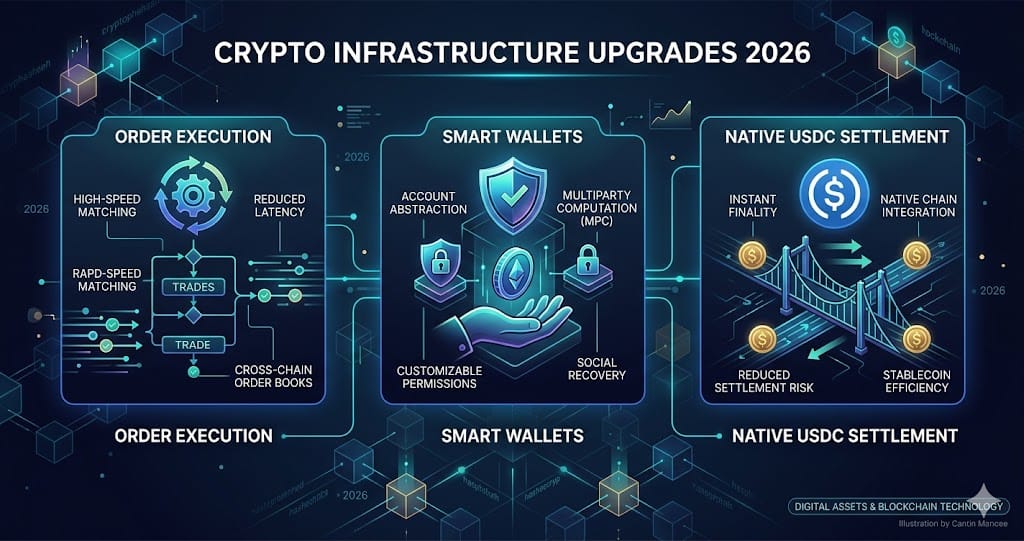
Crypto trading infrastructure in 2026 is shifting from basic order matching to full execution-layer engineering. Exchanges are optimizing order systems, integrating smart contract wallets, and replacing bridged stablecoins with native settlement models. Key changes include faster matching engines, support for EIP-1271 smart wallets, builder-based execution routing, and Circle-driven migration toward native USDC settlement. These upgrades directly affect execution speed, liquidity consistency, and cross-platform trading risk. The impact is measurable: settlement fragmentation from bridged assets is being reduced, while execution systems are handling higher-frequency order flows tied to multi-asset markets including crypto, equities, and commodities.
In This Guide
- Step 1: Understand why order structure upgrades matter in 2026 trading systems
- Step 2: Analyze faster matching engines and execution impact
- Step 3: Use EIP-1271 smart contract wallet compatibility
- Step 4: Understand builder codes and execution routing layers
- Step 5: Shift to native USDC settlement infrastructure
- Tips and Best Practices
- FAQ
Step-by-Step Guide
Understand why order structure upgrades matter in 2026 trading systems
Order structure optimization improves how trades are processed inside exchange engines. Instead of static order books, modern systems use dynamic routing, batching, and liquidity-aware matching logic to reduce execution delays. This matters because 2026 markets include high-volatility instruments such as 10x–100x perpetuals and cross-asset derivatives. Even millisecond delays can shift liquidation prices and slippage outcomes during fast-moving conditions.
Analyze faster matching engines and execution impact
Matching engine improvements focus on reducing latency between order submission and final execution. Exchanges now run parallel processing layers and optimized queue prioritization to handle higher throughput. In practice, this reduces arbitrage gaps between exchanges and improves pricing consistency during ETF-driven liquidity spikes. It also stabilizes execution in volatile sessions when BTC and ETH move sharply within minutes.
Use EIP-1271 smart contract wallet compatibility
EIP-1271 enables smart contract wallets to validate signatures, allowing automated and institutional wallets to interact directly with exchange systems. This replaces reliance on externally owned accounts for execution. This upgrade supports multi-sig treasuries, DAO-controlled trading systems, and algorithmic execution strategies. It also improves compatibility between custody providers and exchange infrastructure, reducing operational friction.
Understand builder codes and execution routing layers
Builder codes introduce a separate execution routing layer where order flow is processed through specialized builders before final inclusion. This improves gas efficiency and reduces execution inefficiencies caused by ordering competition. This system is particularly relevant in high-frequency environments where MEV exposure and transaction ordering can significantly affect trade outcomes. It separates trade intent from execution sequencing.
Shift to native USDC settlement infrastructure
Circle’s infrastructure shift replaces bridged USDC models with native USDC settlement across exchanges. This removes dependency on wrapped assets and cross-chain bridges, which historically introduce liquidity fragmentation. Native settlement improves finality speed and reduces bridge-related failure risk. It also standardizes dollar liquidity across platforms, making cross-exchange capital movement more predictable. Key reference points include:
DeFiLlama for stablecoin supply tracking
Etherscan for on-chain settlement flows
Tips and Best Practices
- Always test with small amounts before committing significant funds.
- Bookmark the official websites of tools mentioned in this guide to avoid phishing.
- Keep detailed records of your transactions for tax reporting purposes.
Ready to start trading?
Trade on Bitget Try CoinTech2uAffiliate links — we may earn a commission at no extra cost to you.
Frequently Asked Questions
Why are matching engine upgrades important in 2026?
They reduce latency in high-frequency markets, improving execution accuracy during volatile price movements.
What does EIP-1271 change for traders?
It enables smart contract wallets to sign transactions, allowing automated and institutional trading systems.
Why is native USDC settlement replacing bridged USDC?
It reduces cross-chain risk, improves liquidity consistency, and increases settlement finality speed.