How to Trade Crypto During Market Crashes in 2026 Using Bitcoin as a Lead Indicator
Learn how to trade crypto during crashes using Bitcoin as a leading indicator. Step-by-step strategy, tips, risks, and key levels for 2026 markets.

Market crashes in 2026 have not been isolated events. A single session saw $820B wiped from US stocks and $120B from crypto, while Bitcoin had already weakened weeks earlier. That sequence matters. It shows how macro shocks—oil spikes, Fed policy, and geopolitical tension—flow through Bitcoin before hitting broader markets.
Bitcoin is acting as a real-time risk signal. It trades continuously, reacts faster than equities, and often leads major moves. Meanwhile, altcoins and leveraged positions amplify downside due to thinner liquidity. Understanding this structure is the difference between reacting late and positioning early.
In This Guide
Step-by-Step Guide
Identify the Macro Environment
Start by assessing the broader macro conditions driving the market. In March 2026, key drivers included the Federal Reserve holding rates at 3.5%–3.75%, rising oil prices above $110, and geopolitical tension from the Iran conflict. These factors reduce liquidity and increase risk aversion.
When multiple macro stressors align, markets tend to move together. Crypto does not operate independently in these conditions. Instead, it reacts faster to tightening liquidity, making macro analysis the first step before any trade decision.
Use Bitcoin as Your Primary Signal
Bitcoin often leads market direction. In early 2026, BTC dropped to ~$60K before equities followed, signaling early weakness. This makes Bitcoin a critical leading indicator for risk assets.
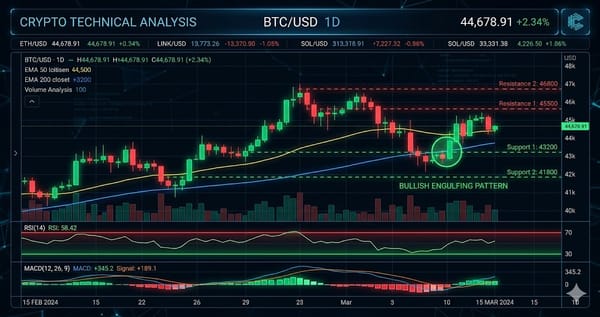
Track BTC structure closely. Lower highs, breakdowns of support, and sustained weakness indicate broader market stress. When Bitcoin weakens while equities are still stable, it often signals an upcoming sell-off across both markets.
Mark Key Support and Resistance Levels
Define clear levels before trading. For Bitcoin, key zones include $62K–$65K support, with psychological levels like $70K and $60K acting as important reference points. For Ethereum, $2,000 remains a critical level.
These levels act as decision points. Breakdowns below support often trigger liquidation cascades, especially in leveraged markets. Trading without predefined levels leads to emotional decisions during high volatility.
Adjust Position Sizing and Risk Exposure
Reduce position size during high-volatility periods. During the March sell-off, crypto lost $120B in market cap, and leveraged positions amplified losses. Smaller position sizes protect capital during unpredictable moves.
Avoid overexposure. High leverage combined with macro-driven volatility can result in rapid liquidations. Instead, focus on capital preservation until market conditions stabilize and volatility decreases.
Wait for Confirmation Before Re-Entry
Do not attempt to catch the exact bottom. Wait for confirmation signals such as stabilization above key levels, declining volatility, and reduced liquidation activity.
Markets often continue trending after initial breakdowns. Entering too early increases risk of repeated losses. A confirmed higher low or consolidation phase is a stronger entry signal than attempting to predict the exact turning point.
Tips and Best Practices
- Always test with small amounts before committing significant funds.
- Bookmark the official websites of tools mentioned in this guide to avoid phishing.
- Keep detailed records of your transactions for tax reporting purposes.
Ready to start trading?
Trade on Bitget Try CoinTech2uAffiliate links — we may earn a commission at no extra cost to you.
Frequently Asked Questions
Why does Bitcoin often move before stocks?
Bitcoin trades 24/7 and reacts instantly to liquidity and sentiment changes, while equities lag due to trading hours.
What is the safest strategy during a crypto crash?
Reduce position size, avoid leverage, and wait for confirmation of market stabilization before re-entering.
How can I tell if the market is near a bottom?
Look for stabilization in Bitcoin, declining volatility, and reduced liquidation activity rather than sharp continued declines.
Related Articles
- The Reform UK Donation Scandal: A Case Study in Crypto’s Transparency Problem
- Is Crypto as Currency Dead? A Trader’s Guide to Adapting to the New Reality
- What If…? 6 Extreme Crypto Scenarios That Could Change Everything