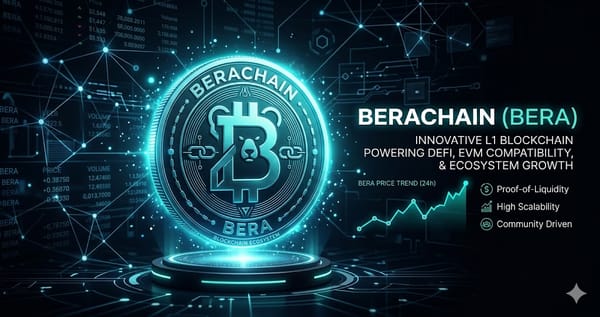
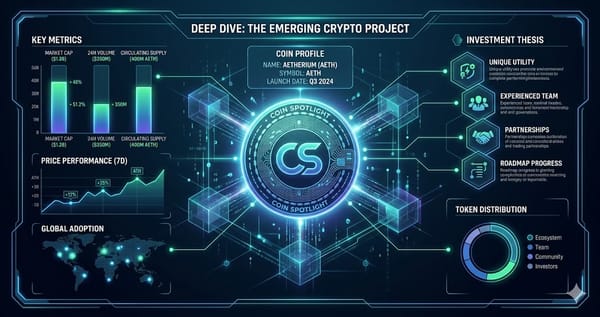
Web3 Visualized: How to Explain Complex Crypto Protocols with AI Art in 2026
Learn how to create AI-powered visual explainers for DeFi, staking, and consensus mechanisms. Step-by-step guide with proven metaphors and toolchains

Tagline: Turn abstract blockchain concepts into stunning visuals that anyone can understand
Meta Description: Learn how to create AI-powered visual explainers for DeFi, staking, and consensus mechanisms. Step-by-step guide with proven metaphors and toolchains for 2026.
In This Guide
Step-by-Step Guide
Identify Your Core Concept and Target Audience
Before you generate a single image, you must narrow your focus. The biggest mistake creators make is trying to explain an entire protocol in one video. Instead, identify a single concept—impermanent loss, validator selection, bonding curves—and build your explainer around that one idea.
Start by mapping your audience's existing knowledge. Are you speaking to complete crypto beginners who need to understand what a liquidity pool is? Or are you targeting DeFi users who grasp the basics but need clarity on advanced mechanics like concentrated liquidity? This distinction determines every creative decision that follows. Beginners need more foundational metaphors (pools, vaults, scales), while experienced users appreciate more abstract visual representations of complex interactions. Write a plain-language script following a problem-solution-value structure: what problem does this protocol solve, how does it solve it visually, and what value does this create for users?
Choose Your Visual Metaphor Framework
Academic research on "blockchain imaginaries" identifies three layers of metaphor that Web3 relies on: structural metaphors (chains, blocks, ledgers), morphological metaphors (work, trust, stake), and substantive metaphors (gold, gas, mining). The most effective AI-art explainers extend these into surreal visual territory while maintaining internal consistency throughout the piece.
For each protocol concept, select a visual metaphor that intuitively conveys the mechanics. A liquidity pool becomes a literal pool of water with token-colored liquids flowing in and out—depth representing total value locked. Impermanent loss visualizes as water evaporating from one side of a split-pool scene. An automated market maker transforms into a balancing scale that auto-adjusts within a cyberpunk marketplace. Smart contracts become self-executing Rube Goldberg devices or mechanical automatons reading scrolls. The key rule: once you establish a metaphor, maintain it consistently. If blocks are crystalline cubes in scene one, they must remain crystalline cubes in scene ten.
Build Your AI Art Production Pipeline
The 2025–2026 AI art landscape has consolidated around a few major platforms, each with specific strengths for Web3 visual creation. For still images and hero assets, Midjourney v6+ excels at surreal concept art and blog thumbnails, delivering production-quality results in about 60 seconds. DALL-E 3 offers superior prompt adherence for precise infographic elements and technical diagrams. For teams requiring complete creative control, Stable Diffusion with SDXL or SD3 models enables batch generation and compositing through ComfyUI workflows.
Video creation requires a different toolchain. Runway ML's Gen-3 Alpha produces cinematic AI video with smooth motion and realistic textures, ideal for 5- to 18-second animated sequences. Pika Labs 2.0 excels at stylized animated concepts and experimental art, perfect for moodboards and transitional elements. For longer-form content, OpenAI's Sora can generate up to 60 seconds of coherent video with complex scene composition, while Google's Veo 3 delivers broadcast-quality video with synchronized audio. Most production workflows combine stills from Midjourney with motion from Runway, compositing everything in traditional editing software.
Select Your Animation Style
Not all animation styles work equally well for blockchain education. Based on engagement metrics across hundreds of crypto explainers, 2D motion graphics lead the category. Clean flat design combined with kinetic typography and smooth transitions creates an accessible, professional look that works for data flows and network diagrams. Production is fast, and the style scales well across different platforms.
Isometric animation provides a technical, precise aesthetic ideal for DeFi protocol walkthroughs. When explaining yield farming steps, AMM mechanics, or liquidity provision flows, the isometric perspective helps users visualize spatial relationships between protocol components. For maximum engagement, character-driven narratives consistently outperform abstract geometric explainers. People relate to stories, not floating shapes—a character navigating a DeFi protocol creates emotional investment that pure diagrams cannot match. Node-and-edge animations work best for on-chain analytics, with wallets as nodes, transactions as flowing lines, thickness representing volume, and color coding for token types.
Refine Through Testing and Iteration
The final step separates professional explainers from amateur experiments. After generating your visual assets and assembling your explainer, conduct structured testing with your target audience. Show the piece to five people who match your intended user profile and ask specific questions: What did they learn? What confused them? Which visuals resonated, and which fell flat? Pay particular attention to metaphor comprehension—if viewers misinterpret your visual representation, the metaphor needs adjustment.
Track engagement metrics rigorously. Heat mapping tools reveal where viewers pause or rewatch, indicating points of confusion or particular interest. A/B test different visual approaches for the same concept. You might discover that your elegant isometric animation underperforms compared to a simpler character-driven approach. The data doesn't lie. Iterate based on feedback, tighten your script, refine your visuals, and test again. The best explainers are not created in one pass—they evolve through continuous improvement based on real user interaction.
Tips and Best Practices
- Always test with small amounts before committing significant funds.
- Bookmark the official websites of tools mentioned in this guide to avoid phishing.
- Keep detailed records of your transactions for tax reporting purposes.
Ready to start trading?
Trade on Bitget Try CoinTech2uAffiliate links — we may earn a commission at no extra cost to you.
Related Articles
- How to Spot Crypto Scams and Rug Pulls — Beginner's Guide 2026
- Crypto Signal Systems Explained 2026: Data-Driven Trading, Backtesting, and Risk Control
- Crypto Thumbnail Tools in 2026: Why Alici.AI Still Wins and When to Add Midjourney