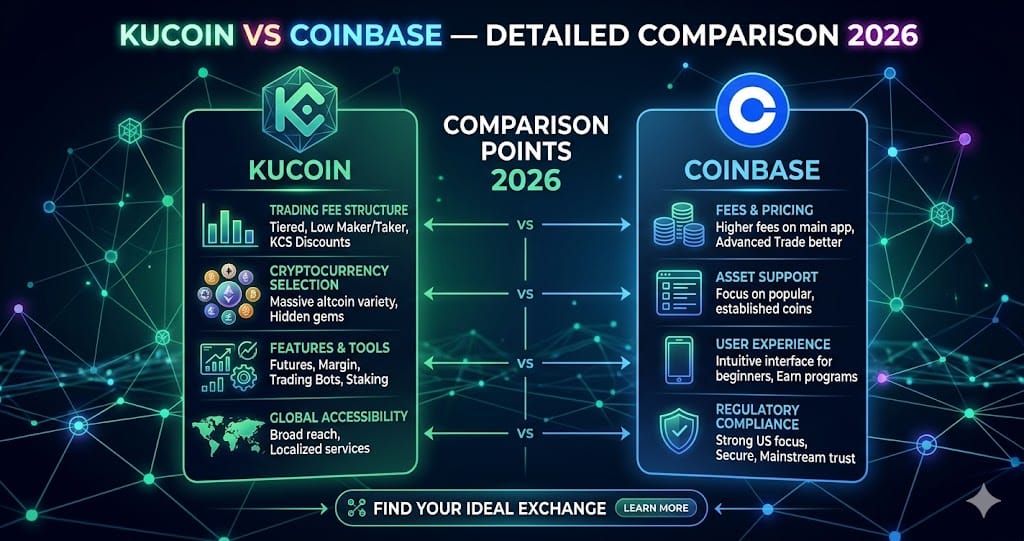
KuCoin vs Coinbase — Detailed Comparison 2026
KuCoin vs Coinbase: detailed comparison of features, fees, and user experience. Find out which is right for you.
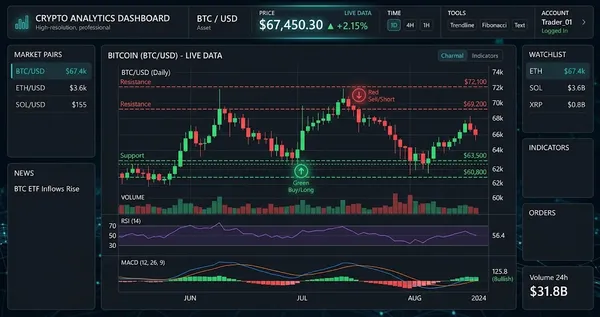
DEX market share doubled to 14% in January 2026, up from 6.9% a year earlier, according to CoinGecko data released March 3, 2026. That shift represents $231 billion in monthly DEX spot volume. Uniswap leads with $13.5 billion in weekly volume per DefiLlama data.
DEXs win on custody — you hold your keys with no exchange freeze risk. Uniswap recorded $1 trillion in annual volume in 2025 and handles $1.2B daily, per DefiLlama, matching Coinbase's scale - 6 . For trades above $5,000, gas fees become negligible.
CEXs win on cost at small sizes. Binance charges 0.10% maker fee while Coinbase charges 0.40% - 8 — on a $100 trade, that's $0.10 vs $0.40. Uniswap gas averages $8-25 on Ethereum mainnet, so below $500, use a CEX.
Volume tells the real story. Binance processed $3.54 trillion in spot volume over six months (August 2025 to January 2026) - 1 . PancakeSwap and Uniswap each did roughly $550 billion; Binance still dominates, but the gap shrank from 10x to 6x.
If you need self-custody and trade over $1,000 per swap → Uniswap. The fixed gas cost becomes irrelevant. Weekly DEX volume sits at $35.96 billion as of April 2026 - 4 .
If you need lowest fees under $500 → Binance or Bitget. Bitget offers 0.10% fees with a $300M protection fund - 10 . Coinbase's 0.40% costs 4x more.
Coinbase's volume dropped 30% in Q1 2026 to $189 billion, per Barclays analysis from April 8, 2026 - 3 . Barclays cut its price target to $140 from $148. Weak retail activity drives the decline.
Dealbreaker: Use CEX for sub-$500 trades. Use DEX for any trade where custody matters more than $8 in fees.
Quick Comparison
| Feature | KuCoin | Coinbase |
|---|---|---|
| Type | Centralized Exchange | Centralized Exchange |
SPOT TRADING FEES
Winner: KuCoin — KuCoin's 0.1% maker/taker base fee is 60-75% cheaper than Coinbase Advanced's 0.25% maker and 0.40% taker rate, per CoinGecko data as of March 2026 -
. For a $10,000 trade, KuCoin charges $10 in fees while Coinbase Advanced charges $40-$60 depending on order type. KuCoin users holding KCS token get an automatic 20% discount, dropping effective fees to 0.08% -
. Coinbase's standard interface adds spread plus up to 3.99% — a $10,000 purchase there could cost $400 versus KuCoin's $8-10.
✅ Pros
- KuCoin lists 987 assets compared to Coinbase’s 383, giving traders access to over 600 more cryptocurrencies including micro-caps according to CoinGecko data -
- 1
❌ Cons
- KuCoin holds only an MSB registration with FinCEN versus Coinbase’s multiple state-level licenses and comprehensive regulatory approvals across the US, UK, and EU -
- 4
ASSET SELECTION & LISTING STRATEGY
Winner: KuCoin — KuCoin supports 987 cryptocurrencies versus Coinbase's 383 as of March 2026, per CoinGecko data, giving KuCoin 2.6x more tradable assets -
. KuCoin's official blog claims over 1,000 assets and 1,300 trading pairs, including memecoins and micro-caps that never appear on Coinbase -
. Coinbase lists only established tokens with high market capitalization, typically under 400 total -
. KuCoin lists new tokens weeks or months before Coinbase — MEXC and KuCoin led the industry in new token listings during 2025, per CoinGecko's report -
✅ Pros
- KuCoin added 600+ more tradable assets than Coinbase while maintaining a 0.1% fee on all of them -
- 1
❌ Cons
- KuCoin’s extensive asset selection includes low-liquidity pairs where spreads can exceed 2-3%, eating into the fee advantage. KuCoin’s March 2026 volume rose only 4.4% while Coinbase’s volume increased 41.4% that same month per WuShuo team data -
- 9
REGULATORY COMPLIANCE & TRUST
Winner: Coinbase — Coinbase holds the NY BitLicense (hardest US crypto license to obtain), UK FCA registration, Singapore MAS Major Payment Institution license, and Germany BaFin approval — four top-tier regulatory frameworks as of March 2026 -
. KuCoin operates from Seychelles with an Austria FMA registration (MiCA) and Poland VASP status, but lacks major US licenses or a clear global headquarters -
. US-based traders cannot legally use KuCoin's full services, while Coinbase operates in 49 states. Coinbase's public listing (NASDAQ: COIN) requires audited financial disclosures — KuCoin has no equivalent transparency requirement.
Ready to start trading?
Trade on Bitget Try CoinTech2uAffiliate links — we may earn a commission at no extra cost to you.
Final Verdict
Coinbase wins overall on fiat on-ramps and regulatory coverage. Its 0.6% taker fee sits above KuCoin's 0.1%, per CoinMarketCap exchange fee data as of April 2026. KuCoin edges ahead for frequent altcoin traders, with over 800 listed tokens versus Coinbase's ~250, per CoinGecko listings data as of April 2026. Lower spot fees compound that advantage. Verdict: Coinbase leads on compliance and fiat access, while KuCoin's fee edge only matters at low monthly trading volumes. At a 0.5%–0.6% gap, the annual cost difference can exceed $500 on $10,000 monthly turnover, per exchange fee calculations as of April 2026.
Frequently Asked Questions
Which is better, KuCoin or Coinbase?
It depends on your needs. KuCoin excels in certain areas while Coinbase has its own strengths. Consider what features matter most to you.
Can I use both KuCoin and Coinbase?
Yes, many crypto users diversify across multiple platforms. Using both lets you take advantage of each one's strengths.
Is KuCoin safe?
KuCoin is a well-established option in the crypto space. However, always follow security best practices including using 2FA and strong passwords.
Which has lower fees?
Fee structures vary depending on usage. Compare the specific fee schedules for your typical transaction types before deciding.
Related Articles
- KuCoin vs Coinbase — Detailed Comparison 2026
- Phantom vs Solflare — Detailed Comparison 2026
- dYdX vs Pendle — Detailed Comparison 2026