Macro News & Crypto Impact — March 14, 2026
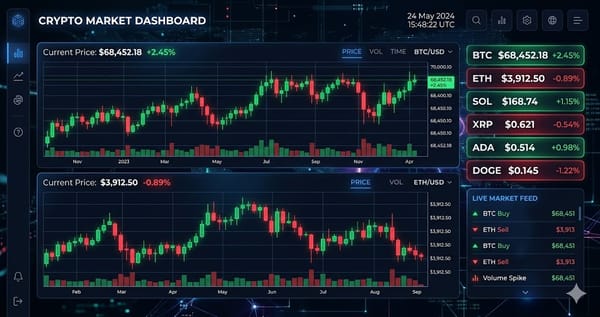
Daily macro news digest: how today's global events affect Bitcoin and crypto markets. BTC at $70,730.

Bitcoin fell to $70,730, down 3.8%, as geopolitical tensions escalated across the Middle East and Washington’s foreign policy posture hardened on multiple fronts. Crypto traders moved into defensive positioning as reports surfaced of U.S. military deployments and strikes tied to Iran, while political friction with allies intensified. The result was a broad risk-off move across digital assets, pushing the Fear & Greed Index to 16 — firmly in Extreme Fear.
War Risk Returns To The Macro Playbook

Roughly 2,200 U.S. Marines were ordered onto three warships heading toward the Middle East late Friday, with destroyers and carrier groups repositioned near the Strait of Hormuz. The timing mattered. The deployment came hours before markets closed, ensuring the full macro reaction will play out when trading resumes Monday.
The geopolitical stakes are unusually high because the Strait of Hormuz handles a significant share of global oil shipments. Any disruption there typically sends crude higher within hours. Higher oil prices feed inflation expectations, which in turn pressure bond yields upward. When yields rise, liquidity tends to leave speculative assets first — and crypto is usually the first casualty.
That mechanism was already visible across the market. Total crypto market capitalization slipped to $2.49T, while major altcoins fell sharply. Solana dropped to $86.78 (-6.3%), Avalanche fell to $9.56 (-6.4%), and Polkadot declined to $1.44 (-6.7%). The broad sell-off shows traders reducing exposure to high-beta assets before the next macro headline hits.
The Kharg Island Strike And Oil Shock Risk
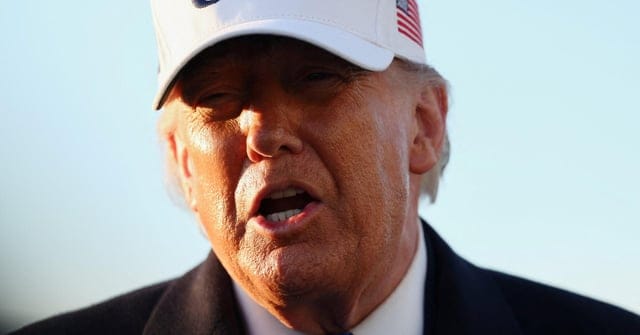
Meanwhile, Donald Trump said U.S. forces struck military defenses on Kharg Island, Iran’s primary crude export terminal. According to the statement, defensive systems on the island were neutralized while oil infrastructure was intentionally spared. Even without direct damage to export facilities, the signal was clear: energy supply routes are now part of the military theater.
Kharg Island is central to Iran’s crude export system. If infrastructure there were disrupted, rebuilding could take years — not weeks. Markets understand that risk. Energy shocks feed inflation expectations quickly, and persistent inflation is the single macro variable that most constrains central bank easing.
That matters for crypto because liquidity cycles dominate digital asset pricing. When central banks are expected to keep interest rates high for longer, speculative capital becomes scarce. The immediate market reaction showed that dynamic: Ethereum slid to $2,073 (-5.5%), while DeFi-heavy tokens like Uniswap dropped to $3.94 (-5.7%).
Diplomatic Isolation Adds Another Layer Of Risk

The military developments came alongside a sharp diplomatic shift. The United States stood alone against a United Nations resolution on women’s rights that ultimately passed by a 37–1 vote. The optics reinforced a broader theme emerging in global politics: Washington’s relationships with allies are becoming more strained.
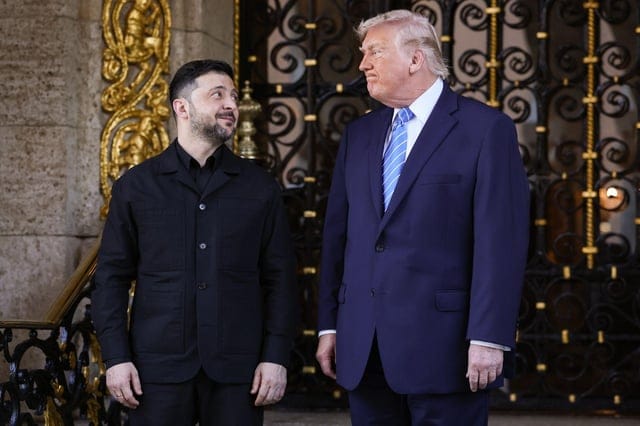
At the same time, Trump rejected an offer from Volodymyr Zelenskyy to assist with drone defense, stating the United States did not need Ukraine’s help. The remark comes as Ukraine’s battlefield experience with drone warfare has become one of the defining features of the Russia-Ukraine war. For markets, the comment signaled further divergence between U.S. leadership and partners involved in the conflict.
Why does that matter for crypto? Global political fragmentation increases currency volatility and complicates international capital flows. When cross-border payment systems become politically sensitive, demand often rises for neutral settlement layers — something digital assets were originally designed to provide.
In previous geopolitical shocks, that narrative helped support Bitcoin. But in the short term, liquidity shocks tend to dominate the price action. Traders sell first and reposition later once the macro picture stabilizes.
Extreme Fear Dominates Crypto Positioning
The market’s emotional state reflects that uncertainty. The Fear & Greed Index fell to 16, firmly in Extreme Fear territory. Sentiment indicators at that level historically coincide with rapid deleveraging across derivatives markets.
The biggest loser among major tokens was HBAR, which dropped to $0.0926 (-7.1%). Other high-beta assets followed closely behind, including Cardano at $0.2606 (-6.6%) and Sui at $0.9898 (-5.5%). Even meme-driven liquidity plays like PEPE slipped to $0.000003 (-5.1%).
Those declines highlight a key pattern in risk-off markets: altcoins fall faster than Bitcoin. BTC’s decline to $70,730 (-3.8%) was sharp but still smaller than most major tokens. That relative resilience often signals capital rotating from speculative assets back into the most liquid crypto benchmark.
The near-term direction now hinges on macro headlines rather than on-chain metrics. If oil prices spike or military tensions escalate further around the Strait of Hormuz, risk assets could face another wave of selling pressure. If tensions stabilize, however, the same Extreme Fear reading that drove the sell-off could set up a rapid relief rally once liquidity returns.
Related Articles
- Understanding Crypto Market Cycles: Where Are We in 2026?
- Daily Market Movers — Saturday, March 14, 2026
- Daily Technical Analysis — March 14, 2026