Macro News & Crypto Impact — March 22, 2026
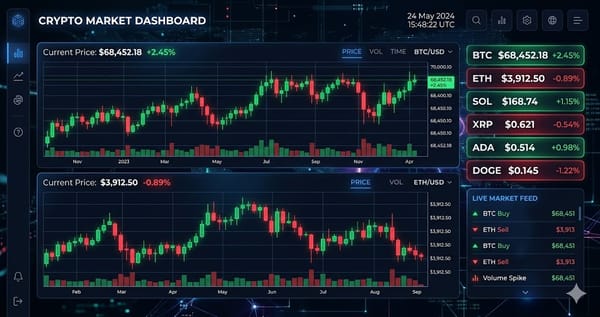
Daily macro news digest: how today's global events affect Bitcoin and crypto markets. BTC at $68,709.

Crypto is declining with Bitcoin at $68,709 (-2.9%) and Ethereum at $2,079 (-3.6%) as escalating threats around the Strait of Hormuz inject energy-supply risk directly into macro pricing, raising the probability of tighter liquidity conditions and pushing risk assets into defensive positioning.
What actually happened
The source material describes a cluster of escalating geopolitical signals centered on Iran, the Strait of Hormuz, and surrounding energy infrastructure. The key development is a repeated pattern of 48-hour ultimatums tied to reopening the Strait, paired with reported threats to target critical infrastructure, including power plants and desalination systems. These systems are not abstract targets—they support electricity and water supply for large populations across the Gulf, meaning any disruption would extend beyond military conflict into civilian and economic systems.
The narrative also includes claims of reciprocal escalation: if one side targets energy infrastructure, the other side may respond by targeting similar assets. That creates a feedback loop where energy systems, shipping routes, and water infrastructure become bargaining tools. The Strait of Hormuz remains the central pressure point because it carries roughly 20% of global oil flows. Even without physical disruption, the mere threat forces markets to price in supply risk.
The crypto mechanism runs through macro channels. Higher perceived oil risk pushes oil prices higher, which feeds into inflation expectations. Elevated inflation reduces the likelihood of central banks cutting rates or adding liquidity. That directly impacts crypto because BTC and ETH tend to perform better when liquidity expands. Meanwhile, uncertainty around conflict timing (48-hour deadlines, shifting statements, and competing threats) increases volatility, which reduces risk appetite and leads to de-risking across speculative assets.
This dynamic hits altcoins harder. Lower-cap assets and higher-beta tokens experience deeper drawdowns because they rely more heavily on liquidity and speculative inflows. The reported declines across AVAX (-4.2%), SUI (-3.9%), and ETH (-3.6%) reflect that risk-off rotation, while assets like SOL (-3.0%) and ADA (-3.0%) show broad-based pressure across major networks. The uniformity of the decline suggests systemic risk rather than isolated weakness.
Where Markets Stand

Bitcoin at $68,709 (-2.9%) sits below key short-term momentum, while the simultaneous drop in Ethereum to $2,079 (-3.6%) confirms that the move is not isolated to a single asset but part of a broader risk-off shift. The Fear & Greed reading at 10 (Extreme Fear) aligns with conditions where buyers step back and sellers dominate, especially when macro uncertainty is rising. The total market cap at $2.44T shows that capital is not rotating into the space during this move, but instead is being withdrawn or sidelined. With all major assets in the top 10 by move showing declines between roughly -3.0% and -4.2%, the market is pricing a coordinated de-risking phase rather than isolated selling.
What to Watch

- Strait of Hormuz status within the next 48–72 hours, specifically whether any shipping restrictions or disruptions are confirmed.
- Brent crude price reaction over the next 3–5 trading days, since oil will be the first asset to reprice if supply risk escalates.
- Fear & Greed Index movement from 10, with any sustained move above 25 indicating easing panic and potential stabilization.
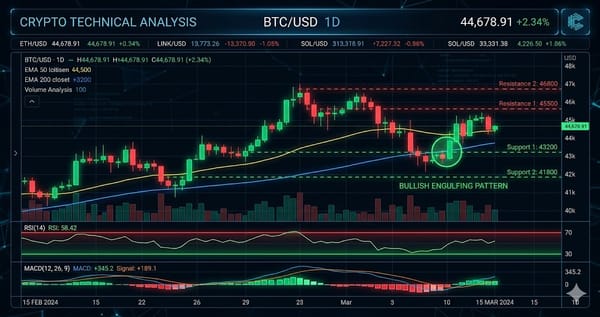
- Bitcoin reaction around the $68,000 area, as holding above this level would signal short-term stabilization while further breakdown would confirm continued risk-off flow.
- Ethereum performance relative to Bitcoin over the next week, since ETH underperformance (-3.6% vs -2.9%) often signals liquidity stress in altcoin markets.
Related Articles
- Daily Technical Analysis — March 22, 2026
- Macro News & Crypto Impact — March 21, 2026
- Daily Technical Analysis — March 21, 2026