Macro News & Crypto Impact — March 29, 2026
Daily macro news digest: how today's global events affect Bitcoin and crypto markets. BTC at $66,528.

Geopolitics as a Risk Engine

Escalating tensions around Iran, combined with reports of thousands protesting in Israel and rising internal pressure against prolonged conflict, are feeding a single macro signal: uncertainty around conflict duration rather than immediate escalation. The crypto market reacts less to the events themselves and more to the probability distribution of outcomes they imply. When protests increase domestically while military activity expands externally, markets begin pricing a wider range of scenarios, which tends to suppress risk appetite across speculative assets.
The mechanism into crypto runs through liquidity expectations and global growth assumptions. Heightened geopolitical friction raises energy price risk and inflation uncertainty, which can delay monetary easing expectations. Higher-for-longer rates reduce the present value of risk assets, including BTC and ETH, while also tightening global liquidity. In this environment, capital tends to rotate toward cash-like positions or highly liquid assets, reducing flows into altcoins that depend on sustained inflows and leverage.
Regional Realignment and Defense Spending Flows

Ukraine securing 10-year defense agreements with Gulf states, alongside reports of over 3,500 additional U.S. troops entering the Middle East, reflects a broader reconfiguration of security dependencies. These developments indicate that regional actors are locking in long-term partnerships rather than relying on short-term diplomatic alignment. The implication is a more persistent defense posture across multiple regions.
For crypto markets, the channel is indirect but consistent. Rising defense commitments correlate with higher fiscal spending and prolonged geopolitical competition. This tends to reinforce inflationary pressures through supply chain disruptions and energy market sensitivity. As inflation expectations remain sticky, central banks are less inclined to cut rates aggressively. That translates into weaker liquidity conditions for risk assets, which disproportionately affects high-beta tokens such as SUI (-4.6%), ADA (-3.4%), and PEPE (-3.3%), all of which require sustained speculative inflows to maintain momentum.
Treaty Instability and Strategic Uncertainty

Reports of Iranian political momentum toward exiting nuclear-related agreements, combined with broader skepticism toward international treaties in multiple regions, point to weakening confidence in formal compliance frameworks. When states signal reduced reliance on treaties, markets interpret this as a rise in strategic ambiguity.
This uncertainty feeds into crypto through volatility expectations. Assets like BTC, which often trade as macro hedges, can benefit in long-term scenarios where sovereign trust erodes, but in the short term, uncertainty increases correlation with risk assets. ETH at $1,986 (-1.8%) and BTC at $66,528 (-0.4%) suggest that immediate positioning is risk-off rather than hedging-driven accumulation. The absence of divergence between BTC and alts reinforces that capital is not yet rotating into crypto as a safe haven but is instead reducing exposure across the board.
Where Markets Stand

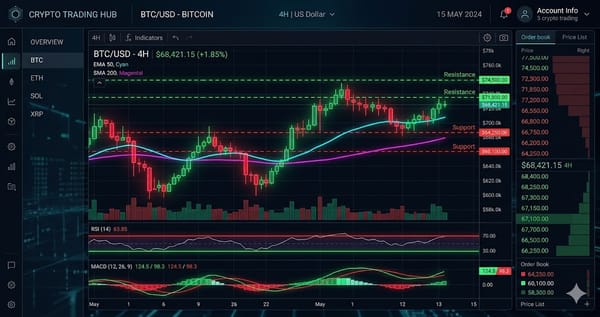
BTC at $66,528 (-0.4%) and ETH at $1,986 (-1.8%) show a market that is drifting lower without panic liquidation, while Fear & Greed at 9 reflects extreme caution among participants. The total crypto market cap at $2.37T indicates that overall valuation remains stable in aggregate terms, but internal dispersion is weak, with most top assets declining in a narrow band between roughly -2% and -5%. This alignment suggests coordinated de-risking rather than isolated weakness.
Altcoin underperformance relative to BTC points to capital consolidation into the most liquid asset while reducing exposure to higher-volatility segments. The market structure is defensive: limited upside participation, compressed sentiment, and steady outflows from speculative tokens. Price action is not collapsing, but it is trending in a way that reflects hesitation to re-enter risk.
What to Watch

- BTC behavior around $66,000: sustained holding or breakdown below this level would signal continuation of the current risk-off trend.
- ETH reaction to the $2,000 area: a failed reclaim could confirm relative weakness versus BTC.
- Changes in Fear & Greed from the current level of 9 over the next 7 days: any move back toward neutral would indicate sentiment stabilization.
- Movement in top altcoins like ADA (-3.4%) and SUI (-4.6%): continued lag versus BTC would confirm ongoing capital consolidation.
- Escalation or de-escalation signals from Middle East developments, particularly troop movements or regional security incidents, as these directly influence energy and liquidity expectations.
Related Articles
- Daily Market Movers — Sunday, March 29, 2026
- Crypto in Extreme Fear (9) — BTC at $66,567 Technical Analysis
- Macro News & Crypto Impact — March 28, 2026