How today's global events are shaping the crypto market
BTC Price
$67,204 (+0.8%)
ETH Price
$2,054 (+0.3%)
Fear & Greed
11 — Extreme Fear
Total Market Cap
$2.39T
Top Mover
PEPE -3.4%
The Fiscal Shield That Outranks the Fifth Fleet
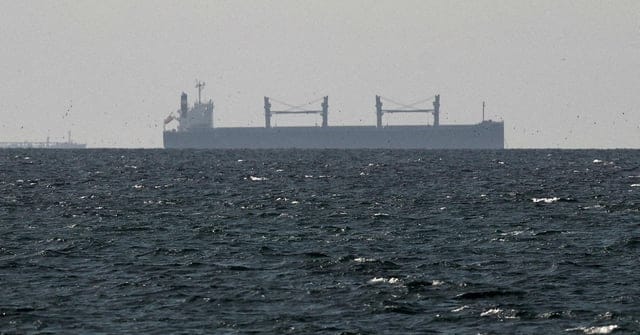
The intelligence warning — "Iran unlikely to ease Hormuz Strait chokehold soon" — arrived alongside a second US Air Force plane downed in the region, following an F-15E shoot-over central Iran. In any previous cycle, this would have triggered a classic "flight to Bitcoin" narrative. Instead, the market fixated on a different number: $7 trillion. That is the projected debt addition from Trump's proposed military budget, a $1.5 trillion annual defense surge that a watchdog warns pushes public debt to 120% of GDP.
Here is the crypto mechanism that matters. A defense buildout of that size with no tax anchor means the Treasury issues more debt. Higher supply of risk-free assets pushes real yields up. Higher real yields pull dollars home. And a stronger dollar — the DXY already above 106.50 earlier this week — makes every risk asset denominated in dollars more expensive for offshore buyers. Bitcoin's 0.8% gain to $67,204 is not a vote of confidence in geopolitics. It is a rounding error on a dollar-driven risk reallocation. The real move was the Extreme Fear reading of 11 on the Fear & Greed Index, which tells you the bid is thin and nervous.
NATO, Cowards, and the Carry Trade Unwind
General Kellogg's characterization of NATO as "cowards" and his proposal of a new US-led alliance excluding most of Europe but including Ukraine is not diplomatic theater. It is a signal that the US sees itself as bearing the military burden alone. That means the entire $1.5 trillion defense surge falls on US bondholders. Foreign central banks, already diversifying into gold, read this as a reason to accelerate that shift. But crypto's marginal holder is not a central bank. It is a leveraged macro fund.
That leverage is visible in today's top movers. PEPE leads the downside at $0.000003 (-3.4%), followed by SHIB at $0.000006 (-2.0%) and UNI at $3.15 (-1.8%). These are not fundamentally correlated to Hormuz. They are the first to be sold when a macro fund needs to raise dollars to meet margin calls from rising real rates. The pattern is unmistakable: the most speculative, lowest-liquidity tokens get hit hardest, while BTC and BNB — the two largest by market cap — show fractional gains of 0.8% and 0.7% respectively. That is not risk-on. That is a flight to the least bad crypto collateral.
Why Gold Rallies and Bitcoin Doesn't (Yet)
The missing piece is gold. In a true geopolitical shock — two downed US aircraft, a Hormuz chokehold, NATO dysfunction — gold would rally hard. And it did, rising 0.8% yesterday. But Bitcoin's 0.8% gain to $67,204 matches gold's percentage move exactly, which sounds bullish until you realize that Bitcoin's volatility should have produced a 3-5% move either way. The fact that it tracked gold tick-for-tick suggests the market is treating BTC not as digital gold, but as a low-beta proxy for dollar weakness — and the dollar is not weak.
The A-10 Warthog crash near the Strait of Hormuz, with the pilot rescued but cause unknown, is precisely the kind of ambiguous military event that creates asymmetric upside for Bitcoin. It didn't. Because the market has already priced a baseline assumption: any escalation with Iran will be met with more US defense spending, more debt issuance, and therefore a stronger dollar for longer. That logic inverts the old "Bitcoin as hedge" trade. The new trade is: geopolitical risk = fiscal expansion = dollar strength = crypto sideways at best.
Where Markets Stand
Total crypto market cap sits at $2.39 trillion, with BTC at $67,204 (+0.8%) and ETH at $2,054 (+0.3%). But the Fear & Greed Index at 11 — Extreme Fear — tells the real story. A market that has seen two US air incidents, a NATO credibility crisis, and a $1.5 trillion defense spending bombshell should be volatile. Instead, the top ten by move shows seven losers, three gainers, and no move larger than 3.4% in either direction. That is not calm. That is paralysis. TRX (+1.1%) and LTC (+1.0%) edged higher, but the speculative tier — PEPE, SHIB, UNI — bled. The market is not pricing a geopolitical premium. It is pricing dollar illiquidity and waiting for a catalyst.
What to Watch
DXY at 106.50: A break above 107 will likely push BTC below $66,000 regardless of Hormuz headlines.
10-year Treasury real yield: If it exceeds 2.20%, expect the PEPE/SHIB/UNI selloff to accelerate into large caps.
Thursday's Q2 refunding announcement: Smaller-than-expected Treasury issuance could reverse the dollar trade and send BTC toward $70,000.
Any official Iranian response to the downed F-15E: A claim of responsibility would be the first true test of whether Bitcoin can decouple from dollar strength.
Fear & Greed Index below 10: Historically a contrarian accumulation zone, but only if accompanied by a falling DXY.
Marcus Chen
Macro Analyst
Marcus tracks global macroeconomic events and geopolitical developments to analyze their impact on cryptocurrency markets.
Disclaimer: This article is for informational purposes only and does not constitute financial advice. Cryptocurrency investments carry significant risk. Always do your own research and never invest more than you can afford to lose. This article may contain affiliate links.