What Are Real World Assets (RWA) in Crypto? The 2026 Guide
Real World Assets (RWA) are bringing stocks, bonds, real estate, and commodities on-chain. Learn how RWA tokenization works, top protocols, and why institutions are paying attention.
What Are Real World Assets in Crypto?
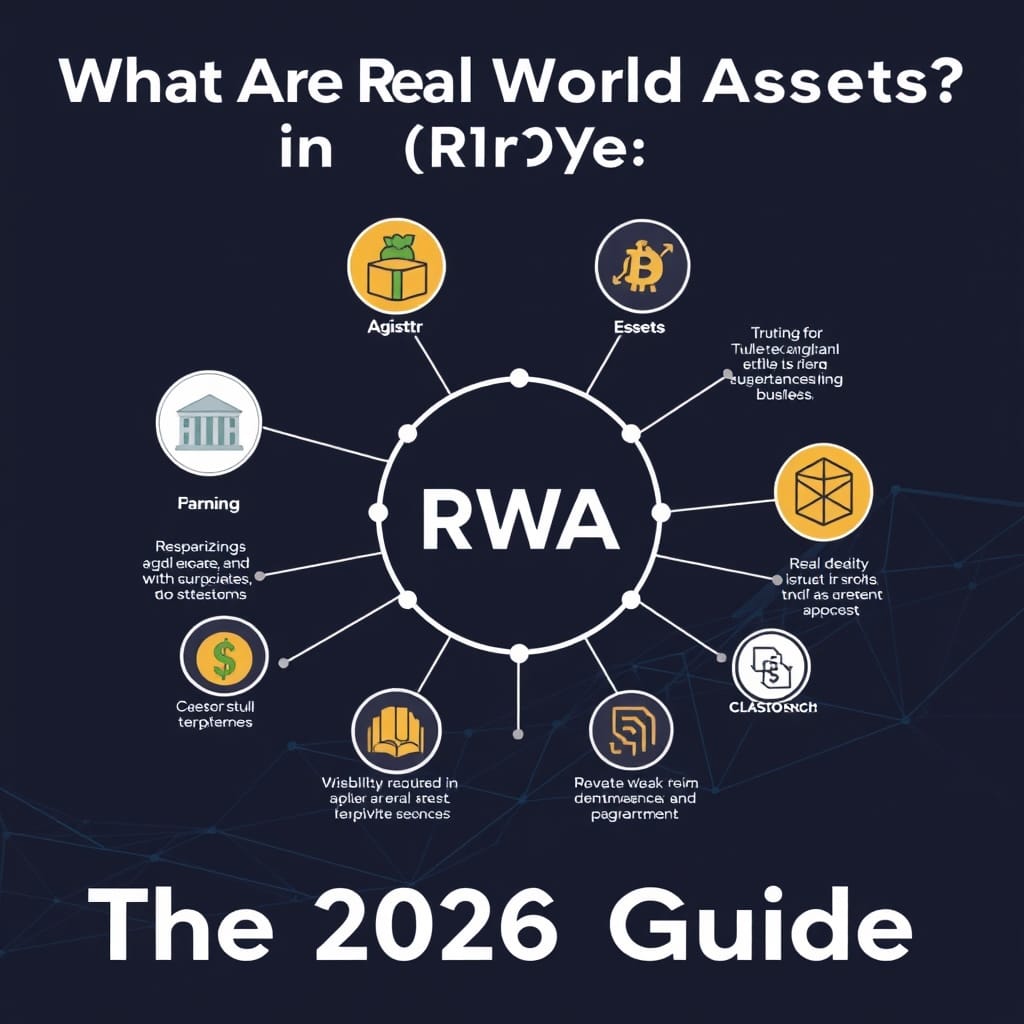
Real World Assets (RWA) refers to the tokenization of traditional financial assets — treasury bonds, real estate, private credit, commodities, and equities — on blockchain networks. By representing these assets as on-chain tokens, they become tradable 24/7, fractionalized, and composable with DeFi protocols.
RWA is one of the fastest-growing narratives in crypto. The total value of tokenized real-world assets (excluding stablecoins) has surpassed $15 billion in early 2026, with BlackRock, Franklin Templeton, and major banks actively participating.
Why Tokenize Real World Assets?
- 24/7 Markets: Tokenized assets trade around the clock, not just during market hours
- Fractional Ownership: Own $100 of a $50M real estate property or a US Treasury bond
- Instant Settlement: T+0 instead of traditional T+2 settlement for securities
- Global Access: Anyone with a wallet can access yields previously reserved for institutions
- DeFi Composability: Use tokenized treasuries as collateral in lending protocols
- Transparency: On-chain proof of reserves and real-time auditing
RWA Categories
1. Tokenized Treasuries
US Treasury bills and bonds on-chain. BlackRock's BUIDL fund (Ethereum), Franklin Templeton's BENJI (Stellar/Polygon), and Ondo Finance's USDY are leading products. Holders earn T-bill yields (~4.5%) while keeping assets on-chain.
2. Private Credit
On-chain lending to real-world businesses. Platforms like Maple Finance, Centrifuge, and Goldfinch connect crypto capital with borrowers in trade finance, real estate, and fintech. Yields range from 8-15% but carry credit risk.
3. Real Estate
Fractional ownership of property through tokens. RealT tokenizes rental properties in the US, distributing daily rent payments to token holders. Lofty and Tangible offer similar products across different property types.
4. Commodities
Gold is the most tokenized commodity: Paxos Gold (PAXG) and Tether Gold (XAUT) are backed 1:1 by physical gold in vaults. Each token represents one troy ounce.
5. Equities & Indices
Tokenized stocks and ETFs are emerging through regulated platforms. Backed Finance and Dinari offer on-chain exposure to S&P 500 stocks and other traditional equities.
Top RWA Protocols in 2026
| Protocol | Focus | TVL | Key Product |
|---|---|---|---|
| Ondo Finance | Tokenized Treasuries | $2B+ | USDY (yield-bearing stablecoin) |
| Centrifuge | Private Credit | $400M+ | Structured credit pools |
| Maple Finance | Institutional Lending | $300M+ | Corporate credit pools |
| BlackRock BUIDL | Tokenized Treasury Fund | $500M+ | Institutional money market |
| MakerDAO | RWA Collateral | $2B+ in RWA | Treasury-backed DAI |
How to Access RWA Yields
Option 1: Direct Purchase
Buy tokenized treasury products like Ondo's USDY or Mountain Protocol's USDM directly. These pay yield while functioning as stablecoins. Some require KYC, others are permissionless on secondary markets.
Option 2: DeFi Integration
Deposit RWA tokens into DeFi protocols for additional yield. For example, use USDY as collateral on lending platforms to borrow against your treasury yield.
Option 3: RWA Protocol Tokens
Buy governance tokens of RWA protocols (ONDO, CFG, MPL) for exposure to the sector's growth. These are more volatile but offer upside if the RWA narrative continues to grow.
Risks to Consider
- Regulatory uncertainty: Tokenized securities may face stricter regulation as governments catch up
- Counterparty risk: You trust the issuer to properly custody and manage the underlying assets
- Liquidity: Many RWA tokens have thin secondary markets — selling large positions may be difficult
- Smart contract risk: On-chain components can still be exploited
- Redemption: Converting tokens back to underlying assets isn't always instant
RWA vs Pure DeFi Yields
RWA yields are generally lower than DeFi yields (4-10% vs 10-30%) but carry different risks. RWA yields are backed by real economic activity — real interest rates, real rent, real business revenue — rather than token emissions or leveraged loops. For investors seeking stable, sustainable returns, RWA offers a compelling middle ground between TradFi and DeFi.
Bottom Line
Real World Assets represent the convergence of traditional finance and blockchain technology. With BlackRock and other institutions actively building on-chain, RWA is no longer an experiment — it's becoming critical infrastructure. The sector is still early, but the direction is clear: trillions of dollars in real-world assets will eventually exist as tokens on blockchains. Understanding this trend now gives you a significant edge.