What Are Smart Contracts? How They Work & Why They Matter
Understand smart contracts: self-executing code on blockchains that power DeFi, NFTs, and DAOs. Learn how they work, their benefits, risks, and real-world examples.
What Are Smart Contracts?
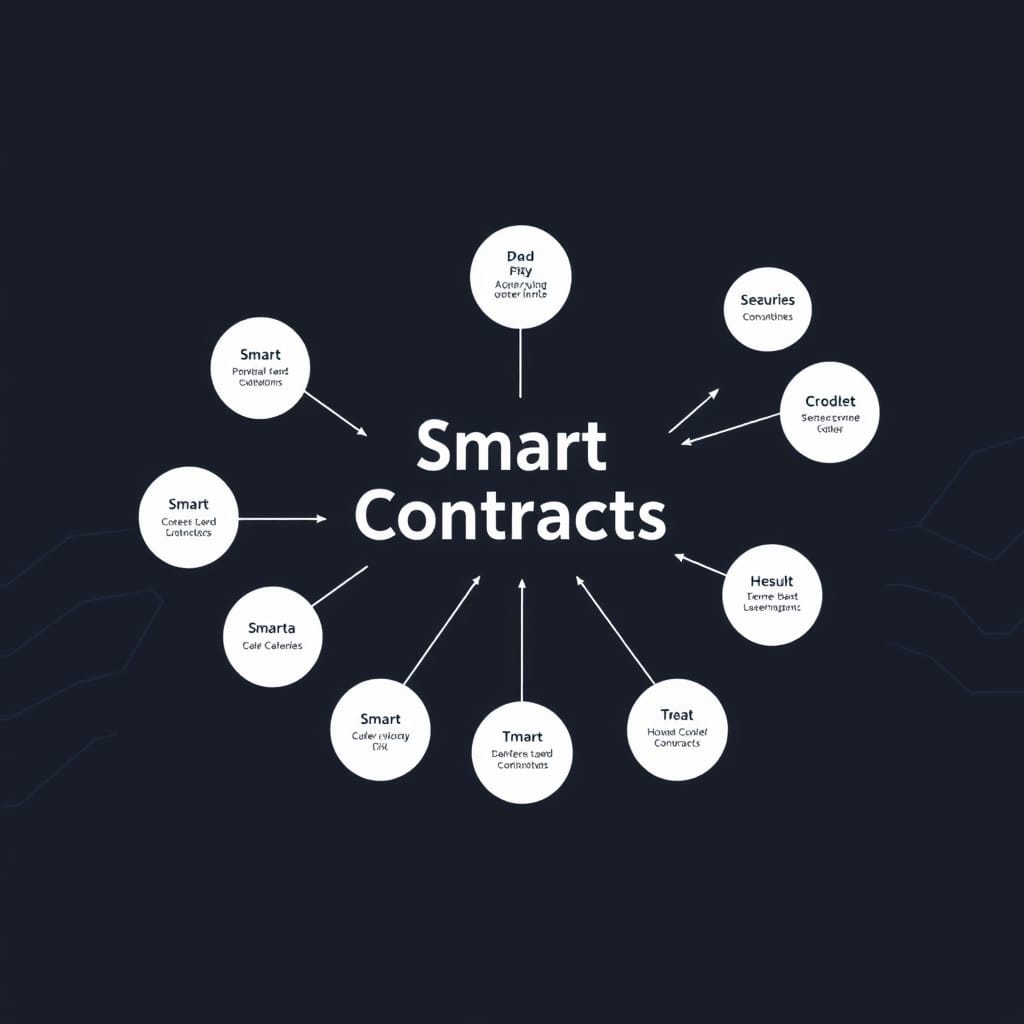
A smart contract is a program stored on a blockchain that automatically executes when predetermined conditions are met. Think of it as a digital vending machine: you insert the right input, and the correct output happens automatically — no middleman required.
Nick Szabo coined the term in 1994, but it was Ethereum's launch in 2015 that made smart contracts practical. Today, they power a $100B+ DeFi ecosystem, NFT marketplaces, DAOs, and much more.
How Smart Contracts Work
The Basics
- Code is deployed to a blockchain (Ethereum, Solana, etc.)
- Conditions are defined: "If X happens, then do Y"
- A transaction triggers the contract
- The blockchain validates and executes the code
- Results are recorded on-chain — permanent and transparent
Simple Example
An escrow smart contract: Alice wants to buy a digital item from Bob. She sends ETH to the smart contract. When Bob delivers the item (verified on-chain), the contract automatically releases the ETH to Bob. If Bob doesn't deliver within 7 days, Alice gets an automatic refund. No judge, no middleman, no trust needed.
Where Do Smart Contracts Run?
| Blockchain | Language | Strengths |
|---|---|---|
| Ethereum | Solidity | Largest ecosystem, most battle-tested |
| Solana | Rust | High speed, low fees |
| Avalanche | Solidity (EVM) | Subnet customization |
| Cardano | Plutus / Aiken | Formal verification focus |
| Polkadot | ink! (Rust) | Cross-chain interoperability |
EVM-compatible chains (Arbitrum, Optimism, Base, Polygon, BNB Chain) all run Solidity smart contracts, making it the most widely-used language.
Real-World Use Cases
1. Decentralized Finance (DeFi)
Smart contracts are the backbone of DeFi. Lending protocols like Aave let you deposit crypto as collateral and borrow against it — all managed by code. Uniswap uses smart contracts to enable trustless token swaps through automated market makers (AMMs).
2. NFTs
Every NFT is a smart contract that defines ownership, royalties, and transfer rules. When you buy an NFT, the smart contract updates the ownership record and automatically pays royalties to the creator.
3. DAOs (Decentralized Autonomous Organizations)
DAOs use smart contracts for governance. Members vote on proposals, and when a vote passes, the smart contract executes the decision — treasury transfers, parameter changes, or protocol upgrades.
4. Gaming & Metaverse
In-game items exist as smart contract tokens. Players truly own their assets and can trade them on open markets without the game developer's permission.
5. Insurance
Parametric insurance contracts pay out automatically when verifiable conditions are met (e.g., a flight delay confirmed by an oracle triggers an instant payout).
Benefits of Smart Contracts
- Trustless: No need to trust a counterparty — code enforces the agreement
- Transparent: Anyone can read the contract code and verify its behavior
- Immutable: Once deployed, the rules can't be changed (unless designed to be upgradeable)
- Efficient: No paperwork, lawyers, or manual processing
- Composable: Smart contracts can interact with each other, creating complex financial products
Risks & Limitations
Bugs & Exploits
Code is only as good as the developer who wrote it. Smart contract exploits have caused billions in losses. The 2016 DAO hack ($60M), the 2022 Wormhole bridge exploit ($320M), and countless smaller incidents highlight the risk.
Immutability Is a Double-Edged Sword
If a bug exists in a deployed contract, it can't be patched unless the contract was designed with upgrade mechanisms. Immutable bugs stay forever.
Oracle Dependency
Smart contracts can't access real-world data on their own. They rely on oracles (like Chainlink) to feed external data on-chain. If the oracle is manipulated, the contract executes based on bad data.
Gas Costs
Executing smart contracts on Ethereum costs gas fees that can spike during congestion. Layer 2s like Arbitrum and Base significantly reduce this cost.
How to Evaluate Smart Contract Safety
- Check for audits: Reputable projects get audited by firms like Trail of Bits, OpenZeppelin, or Certora
- Look at the code: Is it open-source and verified on Etherscan?
- TVL and track record: Protocols that have held billions for years without exploits have battle-tested code
- Bug bounty programs: Projects with large bounties (Immunefi) attract white-hat hackers to find vulnerabilities
- Proxy patterns: Upgradeable contracts add flexibility but also trust assumptions — who controls the upgrade key?
Bottom Line
Smart contracts are the foundation of the programmable blockchain economy. They replace trusted intermediaries with verifiable code, enabling everything from decentralized lending to NFT ownership. But they're not risk-free — bugs and exploits are real. As the ecosystem matures with better tooling, formal verification, and auditing practices, smart contracts will increasingly power real-world applications beyond crypto.