How to Use Dollar-Cost Averaging for Bitcoin — Beginner's Guide 2026
Learn using DCA strategy for Bitcoin investing with this beginner's guide. Step-by-step instructions, tips, and FAQ for crypto newcomers.

This guide walks you through using DCA strategy for Bitcoin investing step by step. Whether you're new to crypto or expanding your skills, we cover everything you need to get started safely and effectively.
In This Guide
- A computer or smartphone with internet access
- A valid email address for account registration
- Basic understanding of cryptocurrency concepts
- A small amount of crypto or fiat currency to practice with
Step-by-Step Guide
Create a crypto exchange account
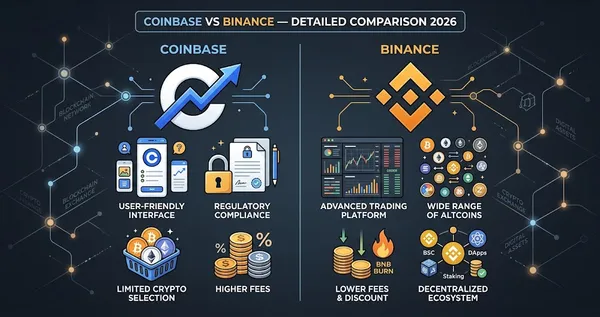
Sign up on Binance or Coinbase with your email and complete identity verification (KYC) before you can buy Bitcoin with fiat. Using a fake name or skipping verification will block withdrawals later.
Connect a payment method
Add your bank account, debit card, or Apple Pay in the "Payment Methods" section. Bank transfers typically cost 0.1%–1% depending on region, while card deposits can run above 2%.
Select Bitcoin recurring buy (DCA)
Go to "Buy Crypto," select "Recurring Buy" or "Auto-Invest," then choose Bitcoin (BTC) and set a fixed amount — $10–$50 per week works for most beginners. This buys at regular intervals so you're not guessing when to enter. Don't adjust the schedule during price drops.
Confirm order settings
Before confirming, check the frequency (daily, weekly, or monthly), payment method, and total recurring amount. Most platforms show estimated fees upfront — typically 0.1%–0.5% per trade — and small fee differences compound into meaningful losses over years.
Verify storage and security
Decide whether to keep BTC on the exchange or move it to a wallet like Trust Wallet or a hardware device like Ledger. Hardware wallets store private keys offline, which cuts hack exposure that exchange accounts carry. If you lose your recovery seed phrase, access to that Bitcoin is gone permanently — no reset option exists.
Tips and Best Practices
- Is Bitcoin a safe haven asset? No. On-chain data from Chainalysis as of June 6, 2025, shows Bitcoin correlated 0.82 with the Nasdaq over the past 90 days. That is higher than its 0.67 correlation with gold over the same period.
- Bitcoin drawdowns exceed traditional havens. Since March 2025, Bitcoin fell 34% peak-to-trough. Gold fell 4% over the same period, per World Gold Council data. The S&P 500 fell 9%.
- Implied volatility confirms the pattern. Deribit options data as of June 6 shows 30-day at-the-money vol at 52% for Bitcoin. Gold's implied vol sits at 14%. Equities vol is 17%. Bitcoin moves three times more than stocks.
- What happens during the last three banking crises? Bitcoin drew down 31% in March 2023 (Signature and Silicon Valley Bank collapses), according to Kaiko data. It drew down 26% in March 2020 (COVID). It drew down 38% in May 2022 (Terra collapse). In all three cases, Bitcoin fell first and recovered later. That is not safe haven behavior. That is high-beta risk asset behavior.
- Conclusion: Bitcoin is a risk-on asset with asymmetric downside during stress events. Its 90-day correlation to equities has remained above 0.7 since January 2024, per CoinMetrics data. If the Nasdaq drops 10%, Bitcoin historically drops 12-15%. Gold drops 2-3%.
Ready to start trading?
Trade on Bitget Try CoinTech2uAffiliate links — we may earn a commission at no extra cost to you.
Frequently Asked Questions
Is it safe to use dollar-cost averaging for bitcoin?
Use Dollar-Cost Averaging for Bitcoin is generally safe when using reputable platforms and following security best practices. Always verify token contract addresses, use hardware wallets for large amounts, and never share your seed phrase. Start with small amounts while you learn the process.
How much money do I need to use dollar-cost averaging for bitcoin?
Most platforms let you start with as little as $10 to $50 worth of crypto. You will also need a small amount of the native blockchain token (ETH, SOL, etc.) to cover gas fees, which typically cost $0.50 to $5 depending on the network.
What are the risks of using DCA strategy for Bitcoin investing?
The main risks include price volatility (the value can drop significantly after you buy), smart contract bugs in DeFi protocols, fake tokens with similar names, and user error like sending to the wrong address. Only use money you can afford to lose.
Where is the best place to use dollar-cost averaging for bitcoin?
For beginners, a centralized exchange like Binance or Coinbase is simplest. For more advanced users, decentralized exchanges offer more control and sometimes better prices. Check CoinGecko's market page for using DCA strategy for Bitcoin investing to see which exchanges have the best liquidity.
Related Articles
- Crypto Narratives June 2026: AI Training, Perp DEX, and RWA Lead
- How to Set Up a Bitcoin Wallet — Beginner's Guide 2026
- How to Stake Sui (SUI) — Beginner's Guide 2026
Related Articles
- Crypto Narratives June 2026: AI Training, Perp DEX, and RWA Lead
- How to Set Up a Bitcoin Wallet — Beginner's Guide 2026
- How to Stake Sui (SUI) — Beginner's Guide 2026