Macro News & Crypto Impact — April 15, 2026
Daily macro news digest: how today's global events affect Bitcoin and crypto markets. BTC at $73,956.

Oil-linked geopolitical shocks pushed crypto into broad risk-off as Bitcoin fell 2.0% to $73,956 and Ethereum dropped 2.6% to $2,326 after reports of U.S. naval interdictions of Iranian-bound tankers and escalating uncertainty around the Strait of Hormuz, amplifying fears of supply disruption and inflation repricing that typically pressures digital assets through tighter liquidity expectations.
Strait Shock and Energy-Driven Risk-Off Flow

Two oil tankers attempting to exit Iran were reportedly intercepted by a U.S. destroyer and ordered to turn back following a blockade action, according to Reuters excerpts shared on r/worldnews (3,294 upvotes). The incident matters for crypto because it directly targets the physical flow of crude through a key chokepoint, which markets translate into higher oil volatility, stronger inflation expectations, and delayed monetary easing.
When energy supply risk rises, real yields tend to climb as inflation expectations reprice faster than nominal policy responses. That dynamic weakens liquidity-sensitive assets first, and crypto is at the front of that chain. BTC (-2.0%) and ETH (-2.6%) both reflect that adjustment, while higher-beta tokens like SOL (-3.9%) and DOGE (-4.1%) absorb sharper de-risking as traders reduce exposure to duration-like assets.
The “Schrödinger’s Strait” narrative circulating in the discussion highlights a second-order problem: policy ambiguity. Markets do not need confirmed supply loss to price risk; they need uncertainty about enforcement consistency. That uncertainty increases volatility in oil futures, which then transmits into crypto through inflation breakevens and dollar liquidity tightening.
China, Strategic Oil Positioning, and Demand-Side Pressure

U.S. Treasury commentary accusing China of “hoarding oil during war conditions,” shared via r/worldnews (1,665 upvotes), adds a demand-side distortion to an already stressed energy market. Even without verified supply disruption, large-scale stockpiling signals perceived future scarcity, which pushes front-end energy pricing higher through expectation channels.
For crypto, this matters because perceived commodity scarcity feeds into inflation expectations rather than current CPI prints. When traders anticipate higher future energy costs, real yields rise before central banks respond, tightening financial conditions in advance. That shift reduces appetite for high-volatility assets, reinforcing downside pressure across majors and altcoins.
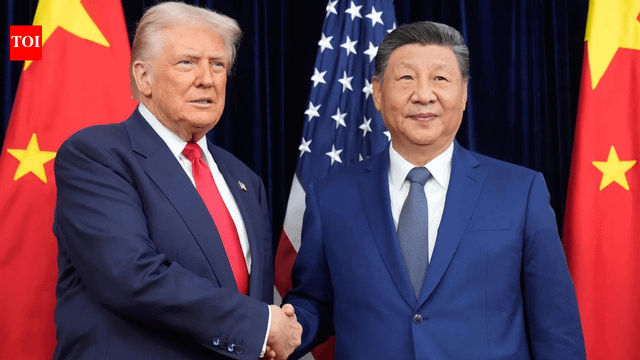
Trump’s claim that he “opened Hormuz for China and the world,” circulated in r/worldnews (1,433 upvotes), intensifies narrative instability around trade flow control. Markets tend to interpret conflicting sovereignty claims over shipping lanes as a volatility premium rather than a directional signal, increasing correlation between crypto and macro hedging flows like the dollar and Treasuries.
Fragmenting Alliances and Policy Uncertainty Spillover
Italy’s signal that it will not automatically renew a defense agreement with Israel, reported via r/worldnews (1,186 upvotes), adds a parallel layer of geopolitical fragmentation. While procedural in nature, it reflects conditional alignment within traditional Western blocs, which markets often associate with higher policy dispersion risk across energy, defense, and sanctions regimes.
For crypto, alliance fragmentation matters because it reduces predictability in coordinated sanctions and trade policy. That unpredictability increases volatility in commodities and FX, which feeds back into crypto through cross-asset deleveraging. Risk models typically reduce exposure to speculative assets when geopolitical coordination weakens and policy paths diverge.
Combined with maritime enforcement uncertainty, the result is a broader regime where geopolitical signals stop acting as isolated events and start behaving as a correlated risk factor. Crypto, being highly liquidity-sensitive, reacts faster than equities to this compression of policy uncertainty into macro volatility.
Where Markets Stand

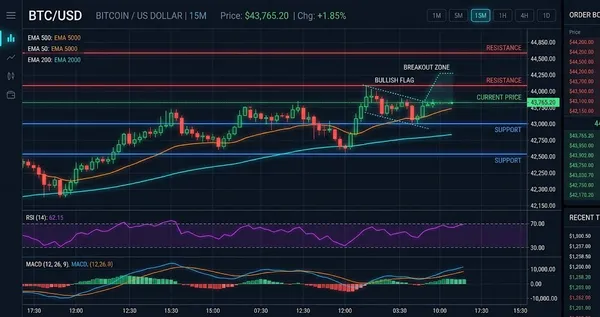
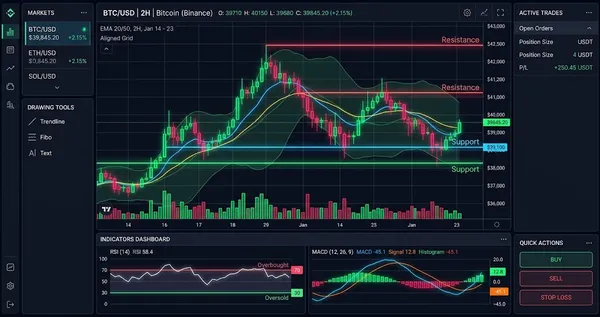
Crypto markets are pricing a synchronized risk-off move rather than isolated token weakness, with BTC down 2.0% to $73,956 and ETH down 2.6% to $2,326, while total crypto market cap sits at $2.59T. The Fear & Greed Index at 23 confirms extreme fear conditions, aligning with a macro environment where energy disruption narratives are tightening liquidity expectations rather than triggering outright panic selling.
Altcoin underperformance reinforces the risk gradient, with SOL (-3.9%), DOGE (-4.1%), and PEPE (-4.0%) showing deeper drawdowns than BTC, consistent with deleveraging cycles where liquidity first exits high-beta exposure before stabilizing at large-cap assets. The pattern reflects macro-driven repricing rather than protocol-specific weakness.
What to Watch
- Strait of Hormuz enforcement updates and any confirmation of sustained tanker interdictions affecting crude flow risk premiums.
- Oil futures volatility spikes, especially moves that push inflation expectations higher and pressure real yields.
- BTC reaction at the $73,000–$74,000 zone, where continued failure to stabilize signals deeper deleveraging.
- ETH relative strength versus BTC at $2,326, tracking whether risk-off rotation continues or compresses.
- Fear & Greed Index holding below 25, which would confirm persistent extreme fear and liquidity contraction conditions.
Related Articles
- Daily Market Movers — Wednesday, April 15, 2026
- BTC Holds $73,860 as Bulls Build Momentum — Daily TA Report
- Daily Market Movers — Tuesday, April 14, 2026