Crypto Deepfake & TikTok Scam Networks in 2026: How Fake BTC Exchanges Steal Funds
Learn how TikTok deepfake scams use fake BTC balances, verification transfers, and celebrity AI videos to steal crypto in 2026 and how to avoid them
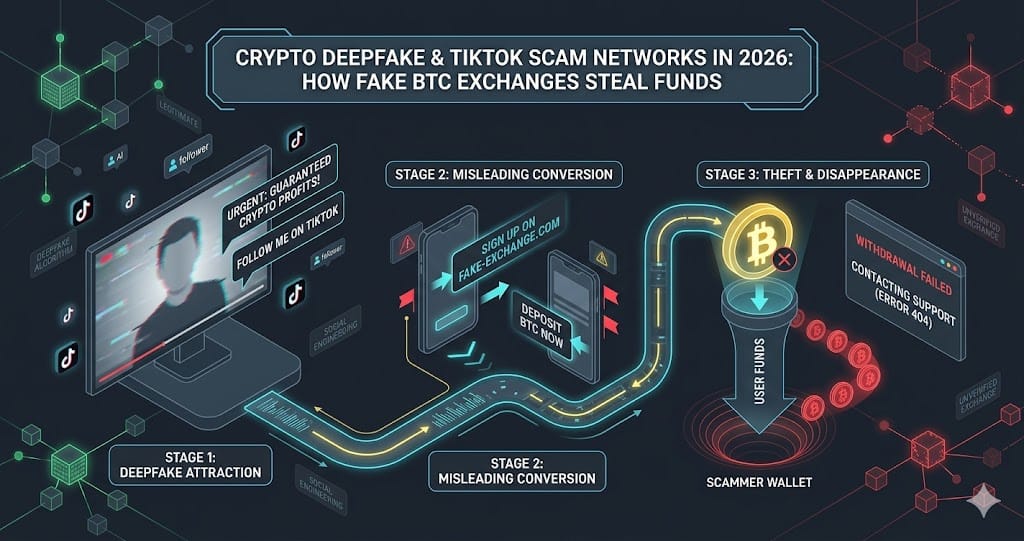
Crypto deepfake scams in 2026 are designed to extract deposits through fake exchanges, not market trading. TikTok-driven fraud networks use AI-generated celebrity videos and fabricated BTC balances to push users into irreversible “verification transfers.” These schemes operate across social media funnels, where victims are shown fake profits before being asked to deposit additional funds. Once sent, crypto is permanently lost due to non-custodial wallet routing and fake exchange interfaces.
In This Guide
- Step 1: Detect deepfake investment triggers in short-form content
- Step 2: Verify exchange authenticity before any registration
- Step 3: Identify the “verification transfer” extraction mechanism
- Step 4: Cross-check balances using on-chain verification tools
- Step 5: Break social proof manipulation loops
- Tips and Best Practices
- FAQ
Step-by-Step Guide
Detect deepfake investment triggers in short-form content
Deepfake crypto scams in 2026 commonly use AI-generated videos of public figures promoting fake BTC opportunities. These videos often circulate on TikTok and Instagram with claims of instant returns or exclusive access codes. The key signal is forced urgency combined with guaranteed profit language. Legitimate financial platforms never use viral video ads to distribute trading access or deposit incentives.
Verify exchange authenticity before any registration
Fake exchanges replicate real trading interfaces and often display fabricated BTC or USDT balances immediately after signup. These balances are not tied to blockchain data and exist only inside the UI layer. Check domain history, regulatory registration, and independent blockchain references before trusting any platform. If liquidity, order books, or wallet proofs cannot be verified externally, the platform is not legitimate.
Identify the “verification transfer” extraction mechanism
A common scam pattern involves showing fake profits and then requesting a “verification deposit” to unlock withdrawals. This step is the primary fund extraction point. No regulated exchange requires users to send additional crypto to withdraw existing balances. Any request involving taxes, unlocking fees, or identity deposits should be treated as a confirmed fraud signal.
Cross-check balances using on-chain verification tools
Scam platforms often simulate account growth without generating real blockchain transactions. Users may see BTC balances that do not exist on public ledgers. Always validate balances using blockchain explorers. If funds are not visible on-chain, the displayed value is only a simulated interface artifact and has no withdrawal capability.
Break social proof manipulation loops
Deepfake scams rely heavily on fabricated testimonials, comment bots, and fake influencer endorsements to create perceived legitimacy. Engagement metrics on TikTok or Telegram are artificially inflated. Treat social proof as non-verifiable by default. Real trading platforms do not require viral validation or celebrity endorsement to support deposit decisions.
Tips and Best Practices
- Always test with small amounts before committing significant funds.
- Bookmark the official websites of tools mentioned in this guide to avoid phishing.
- Keep detailed records of your transactions for tax reporting purposes.
Ready to start trading?
Trade on Bitget Try CoinTech2uAffiliate links — we may earn a commission at no extra cost to you.
Frequently Asked Questions
How do TikTok crypto deepfake scams work?
They use AI-generated celebrity videos to push users into fake exchanges that display fabricated balances and request deposit traps.
Why do fake exchanges show real-looking BTC balances?
The balances are UI simulations and are not connected to blockchain data or real wallets.
What is the most common withdrawal scam method?
The “verification transfer,” where users are asked to send additional crypto to unlock fake profits.