2026 Crypto Narrative Rotation: Prediction Markets, HYPE ETF, and DeFi Signals
Prediction market volume hit USD 24 billion monthly, HYPE spot ETFs drew USD 20.45 million on May 26, and DePIN posted USD 150 million in on-chain
In May 2026, crypto capital rotation became measurable: prediction market monthly trading volume reached USD 24 billion in April 2026, up from under USD 5 billion in September 2025, while HYPE spot ETFs drew USD 20.45 million in net inflows on May 26 as Bitcoin ETFs shed USD 334 million the same day. These numbers from Pew Research and ETF flow data confirm a directional shift that had previously been argued only qualitatively.
The five narratives attracting quantifiable net capital inflows this week are RWA, stablecoins, perp DEXs, AI, and prediction markets. DePIN posted USD 150 million in monthly on-chain revenue for the first time as a sector aggregate, perp DEXs hit USD 492.7 billion in Q1 2026 quarterly volume, and on-chain AI Agent daily active users crossed 250,000 with 400% year-over-year growth. What follows is a structured breakdown of where those flows are coming from and what regulatory and structural factors are driving them.
Prediction Markets Become a Quantifiable Asset Class in May 2026
Prediction market monthly trading volume reached USD 24 billion in April 2026, up from under USD 5 billion in September 2025, representing a 4.8x increase in eight months according to Pew Research data published May 27, 2026. The significance of that source is that Pew Research is not a crypto-native publication, meaning mainstream financial researchers now treat prediction markets as a trackable financial instrument alongside ETFs and perpetual DEXs rather than as a speculative novelty.
In Q1 2026, Kalshi processed USD 33 billion in quarterly volume while Polymarket handled USD 26.17 billion. Kalshi's May 2026 Series F closed at a USD 22 billion valuation, while Polymarket's ongoing round is targeting USD 15 billion, a USD 7 billion gap that reflects diverging business strategies. Kalshi is pursuing institutional distribution through Robinhood and Coinbase and offers macro hedging instruments on CPI, Fed rate decisions, and NFP data. Polymarket has moved toward data monetization via Nasdaq Private Market and an ICE Signals and Sentiment integration that went live in February 2026.
A structural change in the user base adds another dimension. CNN and Fortune both reported on May 28, 2026 that the 18 to 21 age cohort is entering prediction markets in large numbers, drawn partly through meme marketing on platforms where traditional gambling restrictions do not apply. This demographic shift means content and distribution strategies for prediction market products will perform differently on TikTok and Instagram short-video formats than on finance-focused Twitter or LinkedIn.
HYPE Spot ETFs and the BTC-to-Altcoin Capital Rotation
On May 26, 2026, BHYP and THYP combined for USD 20.45 million in net spot ETF inflows on the same day Bitcoin ETFs recorded USD 334 million in outflows and Ethereum ETFs lost USD 35 million. The directional contrast is the clearest single-day evidence yet of institutional capital moving out of large-cap crypto positions and into high-beta L1 assets rather than into cash or traditional equities.
XRP ETFs added USD 22 million and Solana ETFs added USD 15.6 million week-over-week during the same period of BTC and ETH net outflows. A Grayscale GHYP ETF application is also pending on Nasdaq. Hyperliquid's product expansion into pre-IPO perpetuals, SpaceX perpetuals, and equity perpetuals alongside the spot ETF wrappers positions the protocol as an on-chain derivatives infrastructure venue competing with CME's product architecture rather than as a single decentralized exchange.
The investment thesis on HYPE as an asset has shifted as a result. A protocol that processes and custodies exposure to equity-linked perpetuals and receives compliance-wrapped ETF flows is structurally different from a DEX governance token. Market participants tracking this rotation are framing HYPE less as an altcoin and more as a claim on an alternative capital markets infrastructure layer.
DePIN, Perp DEXs, and AI Agents Post First Concrete Revenue Figures
DePIN protocols generated USD 150 million in monthly on-chain revenue in 2026, the first time this sector has reported a concrete aggregate figure. This number provides a baseline for evaluating individual DePIN projects and allows direct comparison with other on-chain revenue-generating sectors. Perp DEX total quarterly volume reached USD 492.7 billion in Q1 2026 according to spotedcrypto data, establishing a full-market denominator for single-protocol volume claims.
On-chain AI Agent daily active users crossed 250,000 in early 2026, a 400% year-over-year increase. Protocols contributing to this include FET, Virtuals on Base, and NEAR. Virtuals specifically enables users to mint AI Agents that operate autonomously and generate transaction-level revenue, which anchors the revenue model at the protocol layer rather than depending entirely on token price speculation.
Stablecoin-as-a-Service has emerged as a separate B2B infrastructure category distinct from consumer stablecoin wallets. Enterprise stablecoin infrastructure venture investment grew from under USD 50 million in 2019 to over USD 1.5 billion in 2026, a 30x increase. Projects like Tempo and MeshConnect target businesses building programmable stablecoin rails into their own products, a different customer profile from the retail wallet or cross-border remittance use cases that defined the prior cycle's stablecoin narrative.
Regulatory Signals Shaping DeFi, Prediction Markets, and Altcoin Sectors in 2026
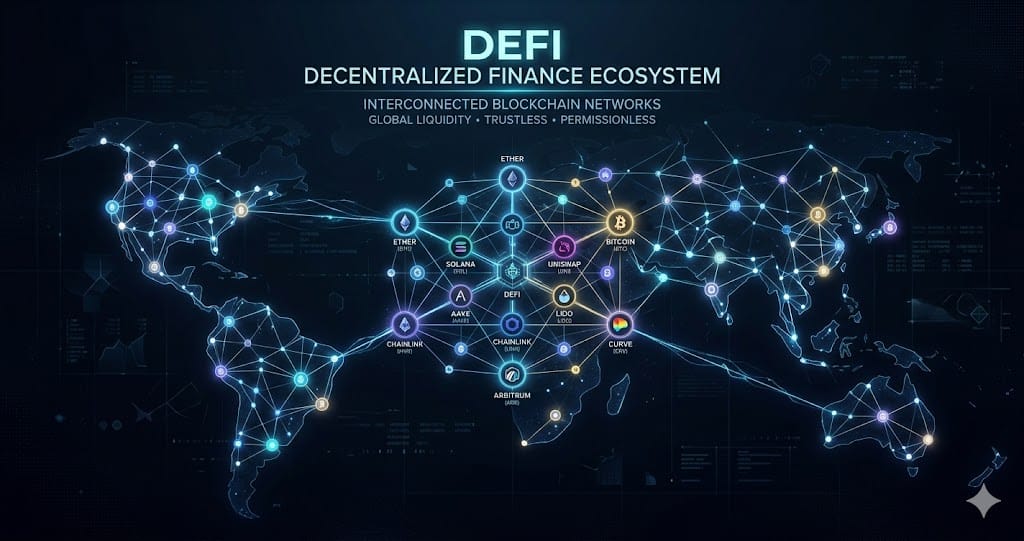
SEC Chair Atkins released a DeFi innovation exemption signal during the week of May 26, 2026, recoupling the RWA and DeFi narratives that had been treated as separate investment tracks for most of the prior 12 months. If a formal exemption framework emerges from the SEC, the most direct beneficiaries would be DeFi blue-chip protocols, RWA issuance modules, and modular DeFi primitives that have been operating in a regulatory gray zone since the DeFi summer era.
India blocked Polymarket access on May 22, 2026, with Kalshi facing potential similar restrictions in that market. On May 27, 2026, the White House announced it was reviewing the CFTC's proposed prediction market regulatory framework. Two opposing regulatory signals in the same week illustrate the asymmetric risk profile of prediction market exposure: favorable US regulatory movement could significantly expand the addressable market, while emerging market bans reduce global volume and raise platform risk for non-US users.
Memecoin total market cap has declined from USD 150.6 billion at its December 2024 peak to USD 33.7 billion in April 2026, a 77.6% drawdown. This does not mean attention has left the category entirely, but it does indicate that the prior cycle's broad-based meme speculation has compressed into a narrower set of active launchpads and AI-meme crossover projects. Pump.fun's single-day volume figures from prior data suggest the surviving activity is concentrated at the launchpad infrastructure level rather than distributed across thousands of speculative tokens.
What to Watch
- BHYP and THYP daily net inflow data, which totaled USD 20.45 million on May 26, 2026, and serves as a proxy for institutional appetite for high-beta L1 assets relative to BTC and ETH ETF flows
- Kalshi's Series F valuation at USD 22 billion versus Polymarket's in-progress USD 15 billion round, a spread that will widen or narrow depending on CFTC framework outcomes and geographic expansion decisions
- Grayscale and Bitwise dual TAO spot ETF applications for Bittensor, which if approved would make TAO the fourth crypto asset after BTC, ETH, and SOL to receive US spot ETF status, with TAO market cap ranging between USD 2.3 billion and USD 3.5 billion in April 2026
- SEC Chair Atkins DeFi innovation exemption timeline, as any formal proposal would directly affect valuation multiples for DeFi blue chips, RWA protocol tokens, and modular DeFi infrastructure assets
Ready to start trading?
Trade on Bitget Try CoinTech2uAffiliate links — we may earn a commission at no extra cost to you.
Frequently Asked Questions
What drove prediction market trading volume to grow 4.8x between September 2025 and April 2026?
Volume growth reflects a combination of retail access expansion through Kalshi and Polymarket, Gen Z user acquisition via meme marketing on short-video platforms, and institutional adoption through Kalshi's Robinhood and Coinbase distribution partnerships and macroeconomic hedging products tied to CPI and Fed rate decisions. The Pew Research report published May 27, 2026 added a mainstream media validation layer that is likely to further accelerate new user registration in the near term.
Why did HYPE spot ETF inflows stand out on May 26, 2026 when Bitcoin ETFs were losing USD 334 million the same day?
The USD 20.45 million net inflow into BHYP and THYP on May 26 reflects a capital rotation pattern in which institutional investors reduce exposure to large-cap benchmark crypto assets and reallocate into higher-beta alternatives. Hyperliquid's expansion into pre-IPO perpetuals and equity perpetuals has shifted the asset's institutional framing from a DEX governance token to a share in on-chain derivatives infrastructure, which broadens the investment thesis beyond pure crypto-native buyers.
What is Stablecoin-as-a-Service and how does it differ from standard stablecoin projects like USDC or USDT?
Stablecoin-as-a-Service refers to enterprise infrastructure that enables businesses to issue or integrate stablecoins into their own products and workflows, as opposed to end-user stablecoin wallets or consumer payment applications. Projects like Tempo and MeshConnect target B2B clients that need programmable stablecoin rails built into their internal systems. Venture capital investment in this category grew from under USD 50 million in 2019 to over USD 1.5 billion in 2026, signaling that institutional capital is treating this as a financial infrastructure layer rather than a speculative token category.