Macro News & Crypto Impact — May 11, 2026
Daily macro news digest: how today's global events affect Bitcoin and crypto markets. BTC at $81,153.
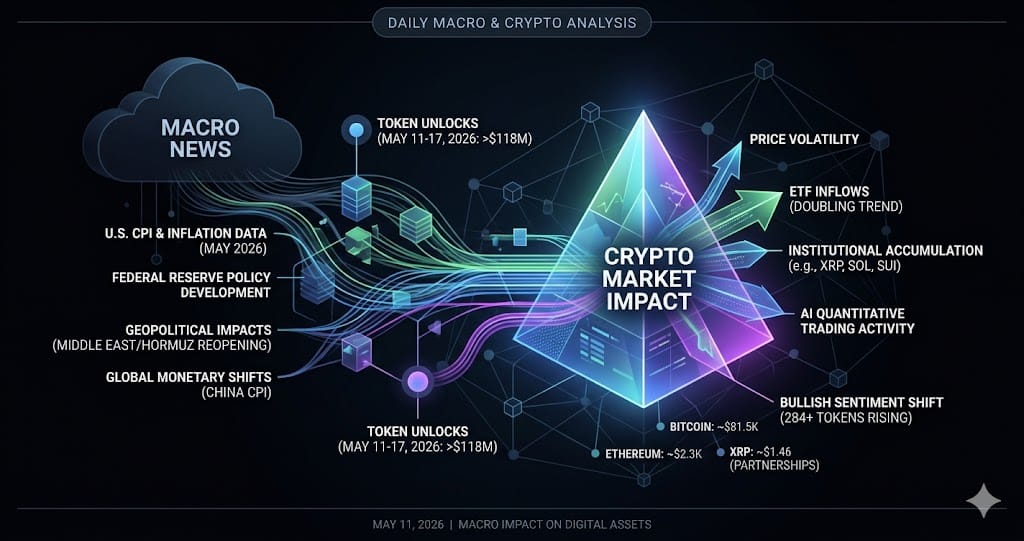
On a day when North Korea banked half its GDP off artillery shells headed for Ukraine, the US Treasury admitted it needs to borrow more than expected because cash flow is weakening — and yet Bitcoin is flat, the Fear & Greed Index sits exactly at 48, and the market’s biggest mover is a layer-one token nobody was discussing a month ago. That stillness is not composure. It is the sound of traders refusing to acknowledge that the geopolitical and fiscal backstop they’ve relied on since October just fractured in four separate places at once.
The Bond Market Is Shouting, and Crypto Is Covering Its Ears

The federal government must issue more debt than it expected. That is not a prediction. It is a statement from the Treasury, driven by weakening cash flow. And as one economist noted in the source material, “the bond market is shouting.” The translation for crypto is brutally simple: more Treasury supply means higher real yields, a stronger dollar, and tighter liquidity conditions for everything outside the sovereign credit complex. The last time the Treasury surprised to the upside on issuance — August 2023 — Bitcoin fell 11% in two weeks. Today, with BTC at $81,000, perpetual funding is neutral, which means leverage is still elevated but no one is hedging. That is not resilience. That is denial. The bond market is shouting, and crypto is covering its ears.
The New Axis of Fiscal Leakage: Warsaw to Pyongyang

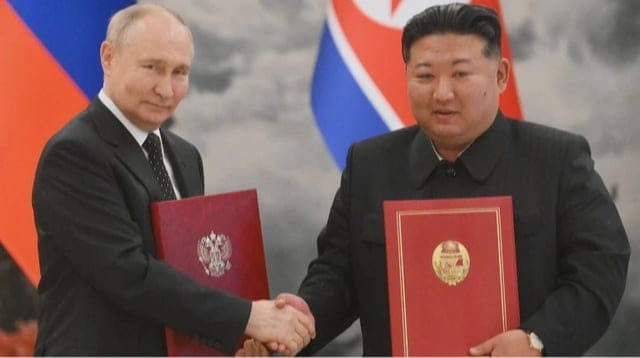
Fugitive former Polish Justice Minister Zbigniew Ziobro is now in the United States on a visa from Donald Trump after fleeing Hungary. That sentence would be absurd if it were not being reported with a straight face. Its relevance to crypto is indirect but structural: the rule of law arbiter for an entire EU member state is now a political refugee in a country whose former president faces multiple indictments. When legal boundaries become porous, capital flows follow the path of least resistance — and that path increasingly bypasses regulated finance. But the more immediate macro shock comes from Pyongyang. North Korea earned half of its GDP supporting Russia’s war against Ukraine. Half. That is not a sanctions evasion side hustle. That is a wartime economy funded entirely by foreign conflict. The dollars Pyongyang earns from weapons sales do not sit in US Treasury accounts. They move through mixers, through Tron-based USDT, through a shadow settlement system that the crypto industry has been reluctant to acknowledge. Every time you see a flat funding rate, remember: there is a state-level actor whose entire GDP depends on this plumbing staying open.
The Draft Notice Israel Cannot Send

The IDF chief warned lawmakers that the army “will fall apart” without additional soldiers. The subtext — and the Reddit commentary makes it explicit — is the Haredi exemption. One-third of the country works, one-third fights, one-third goes to religious school, and it is the same one-third. Israel is staring at a conscription crisis while facing a multi-front war. The fiscal and social cost of that imbalance is already visible in the shekel’s risk premium. But for crypto, the signal is different. Israel is a top-five nation for crypto startup formation, from layer-2 infrastructure to institutional custody. When a startup ecosystem’s home country begins to question whether its military can sustain itself, the risk premium on those tokens rises — not because of war, but because of the slow erosion of state capacity. Wartime innovation is real. Endless wartime is a tax base destroyer.
Iran, Trump, and the Sunday Market Rig
Iran responded to a US ceasefire proposal. Trump rejected it as “unacceptable.” And one Reddit user noted, with weary precision: “It’s Sunday. Time to rig the market again.” That cynical read is more accurate than most fundamental analyses. The rejection did not move oil. It did not move gold. It did not move Bitcoin. But it should have. A rejected ceasefire with Iran — one of the few remaining geopolitical variables that can still spike energy prices and scramble dollar liquidity — ought to register. That it did not tells you more about market positioning than any on-chain metric. Traders have decided that geopolitics are a summer jam: repetitive, ignorable, and ultimately fadeable. That worked from November to March. It is not working now, as the bond market shouts and Pyongyang cashes artillery checks.
Positioning note: Neutral to short on a two-week horizon, not because the bull case is broken, but because the cost of ignoring four separate fiscal and geopolitical fractures is about to become observable. Flat markets before a debt issuance shock are not a resting point. They are a launchpad for the next 5% move, and the bond market’s vector is clear.
Related Articles
- Daily Market Movers — Monday, May 11, 2026
- BTC at $80,787 — Daily Crypto Technical Analysis (May 11, 2026)
- Sui Surges 25% — Here's What's Behind the Move