Macro News & Crypto Impact — August 29, 2026
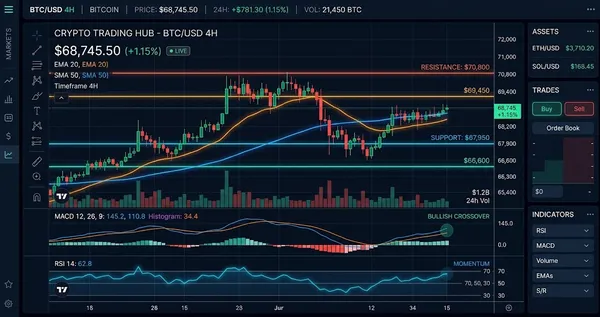
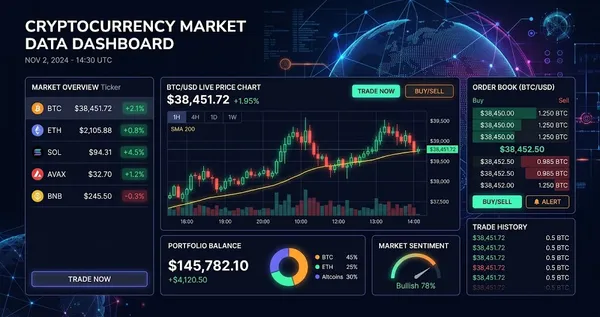
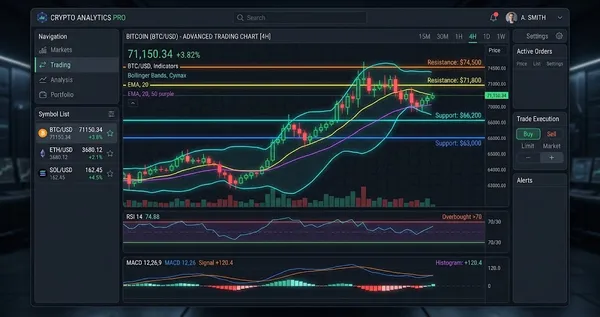
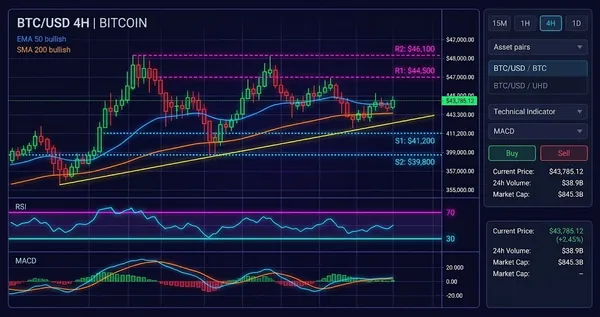
Daily macro news digest: how today's global events affect Bitcoin and crypto markets. BTC at $77,700.

Fed Chair Kevin Warsh is signaling that inflation is still keeping the central bank from an easy policy pivot, and that message is already hitting crypto: BTC has fallen 2.3% to $77,700 while ETH is down 3.2% to $2,436 as investors reassess how quickly monetary conditions can loosen. Warsh said on August 28 that the Fed needs clearer evidence that underlying inflation is moving toward its 2% objective at a sufficient pace; otherwise, he said, the central bank still has “work to do.” :contentReference[oaicite:0]{index=0}
Warsh Changes the Rate-Cut Equation
The important shift is not simply that the Fed remains worried about inflation. It is that Warsh is pushing back against the idea that policymakers can follow a predictable rate path based on a fixed economic model. In his August 28 Jackson Hole remarks, he argued that supply conditions are difficult to observe, economic relationships change, and forward guidance can fail when the economy moves outside familiar patterns. :contentReference[oaicite:1]{index=1}
That matters for crypto because Bitcoin has increasingly traded as a liquidity-sensitive macro asset. If the Fed needs more evidence before easing, the path toward easier financial conditions becomes less certain. That tends to raise the opportunity cost of holding non-yielding assets and can pressure the speculative capital that supports higher-beta tokens.
The Fed's August 28 remarks also make clear that Warsh is not declaring victory over inflation. He said inflation remains above the central bank's target and that recent improvements have not yet convinced him that the underlying trend has meaningfully changed. For crypto, the key distinction is between inflation becoming less bad and inflation becoming sufficiently controlled for policymakers to confidently ease.
The Fed Has a Data Problem, Not Just an Inflation Problem
The Fortune argument about the Fed being slow or wrong in reading inflation fits into the same problem from another direction. Warsh acknowledged that policymakers cannot precisely observe the supply side of the economy and that forecasting remains imperfect. That creates a difficult setup: the Fed must react to inflation without knowing exactly which pressures are temporary and which are becoming embedded.
That uncertainty can create sharper crypto moves around each major macro release. Markets may price an easier policy path when inflation data improve, only to reverse when officials conclude that the improvement is not durable. Bitcoin therefore becomes sensitive not just to the inflation number itself, but to how Fed officials interpret the trend behind it.
Warsh's comments also put more weight on actual financial conditions than on promises about future policy. He described short-term interest rates as the Fed's main policy tool and argued that unconventional measures should generally be used sparingly. That is a less friendly framework for speculative assets than a market expecting repeated policy support.
Growth Is Cooling at the Same Time
The more complicated part of the story is that inflation concern is arriving alongside signs of softer services activity. The Kansas City Fed reported on August 28 that its Tenth District services composite fell to -3 in August from 14 in July, while expectations for future activity dropped to 5 from 24. :contentReference[oaicite:2]{index=2}
That creates the macro tension crypto traders need to watch. A weaker services sector can eventually support the case for easier policy, but if inflation remains sticky, the Fed may have less room to respond quickly. The result is a potentially awkward mix for risk assets: slower growth without the clean monetary-policy relief that usually makes a slowdown bullish for liquidity-sensitive markets.
The Kansas City Fed survey also showed revenue and sales activity falling to 0 from 19, while employment moved to -4 from 4. At the same time, the year-over-year services composite remained positive at 11. That is not a collapse in activity. It is a cooling signal, which makes the Fed's inflation judgment even more important.
Technology adds another layer. The Kansas City Fed found that 31% of surveyed firms cited technology improvements as the main factor allowing them to increase production without adding workers. That supports Warsh's argument that structural changes can complicate the relationship between conventional economic indicators and inflation, making the Fed less willing to rely on old assumptions. :contentReference[oaicite:3]{index=3}
Where Markets Stand
Crypto is already pricing some of that caution. BTC at $77,700 is down 2.3%, while ETH at $2,436 has fallen 3.2%, and the total crypto market cap stands at $2.64T. Fear & Greed remains at 68, or Greed, so the selloff has not yet translated into broad capitulation; instead, the mix of falling majors and elevated sentiment suggests investors are trimming risk while still holding a relatively constructive market bias.
The breadth of the decline is more revealing. BCH is the weakest of the listed major movers at $245.20, down 5.0%, while PEPE is also down 5.0%; UNI has fallen 4.3%, ADA 4.1%, and LINK 3.9%. The pressure is therefore reaching both large-cap infrastructure tokens and higher-beta speculative assets, consistent with a market becoming more selective about risk rather than simply selling one isolated sector.
What to Watch
- BTC at $77,700: A sustained break below today's level would show that the Fed's inflation message is gaining more traction across crypto risk appetite.
- ETH at $2,436: Its 3.2% decline is larger than BTC's 2.3% drop, making ETH relative performance an important gauge of appetite for higher-beta crypto exposure.
- Fear & Greed at 68: Watch whether sentiment remains in Greed as prices weaken, because a move away from 68 would indicate that macro pressure is spreading beyond active traders.
- September policy expectations: The next major question is whether incoming inflation and labor data give Warsh and the FOMC enough confidence that underlying inflation is moving toward the Fed's 2% objective.
- Next Kansas City Fed services reading: August's composite fell to -3 from 14 in July, so a further deterioration would strengthen the growth side of the case for easier policy while putting greater focus on the inflation side of the mandate.
Related Articles
- Daily Market Movers — Saturday, August 29, 2026
- BTC Holds $77,467 as Bulls Build Momentum — Daily TA Report
- Macro News & Crypto Impact — August 28, 2026