Tokenized Stocks and DeFAI: Crypto's Hottest Sectors in June 2026
Tokenized equities and DeFAI are June 2026's breakout sectors. RWA market cap rose 589% YoY; AI crypto hit USD 30B. Watch SPCX, WLD, and JTO.

Tokenized equities became the most-discussed crypto sector in the second week of June 2026, triggered by SpaceX completing its IPO on June 12 at a USD 1.77 trillion valuation after raising USD 75 billion. Within hours, Backpack Securities launched SPCX on Solana, Binance distributed USD 1 million in SpaceX shares through its bStocks promotion, and the SpaceX narrative token ASTEROID gained roughly 100% in a single trading day.
The move landed on top of already-strong structural momentum. The broader RWA market expanded from approximately USD 12 billion in June 2025 to USD 32 billion by May 2026, a 589% year-over-year increase. At the same time, the DeFAI sector — autonomous AI agents executing DeFi strategies — grew from USD 3.2 billion to nearly USD 30 billion in market cap over the same period, with CoinGecko now tracking over 150 actively trading DeFAI projects.
Tokenized Equities: How the Sector Is Structured in 2026
Four issuers dominate the tokenized equity market as of mid-2026: Backed Finance issues xStocks for non-US retail users, Dinari issues dShares for accredited US investors, Robinhood issues tokenized stocks for EU and EEA users, and Kraken distributes xStocks through a Backed Finance partnership. Kraken currently lists over 100 US stock and ETF tokens and has stated a target of over 500 by end of 2026.
Each token is backed 1:1 by shares held at a regulated custodian, covering names including AAPL, TSLA, NVDA, and MSFT. The primary selling points are 24/7 trading and composability with DeFi protocols — neither of which is available through legacy brokerage accounts. Proponents frame this as the beginning of a migration from the USD 134 trillion global equity market onto crypto settlement rails.
Structural cracks appeared quickly after the SpaceX IPO. Several crypto firms pulled planned tokenized SpaceX share offerings after SPCX listed and immediately traded at a premium, exposing liquidity gaps and allocation mismatches in fractional ownership models. This episode is the first documented stress test of tokenized equity infrastructure at scale and warrants close monitoring as issuance expands.
Robinhood Chain: Building a Dedicated L2 for Securities
Robinhood launched the public testnet for Robinhood Chain in February 2026. The chain is an Arbitrum-based Ethereum L2 designed specifically for tokenized securities, supporting 24/7 trading, self-custody, and composability with Ethereum DeFi protocols. Robinhood first introduced over 200 tokenized stock and ETF products at a Cannes event on June 30, 2025, exclusively for EU and EEA users.
The structural significance is that Robinhood has moved from token issuer to settlement layer operator. By building its own chain, it gains control over transaction ordering, fee extraction, and protocol composability. The HOODX token provides on-chain exposure to Robinhood equity and is the most direct instrument for investors expressing a view on this development.
Geographic fragmentation remains the defining constraint for the entire sector. Robinhood Chain is restricted to EU and EEA. Dinari's dShares require US accredited investor status. Most xStocks issuers exclude US retail investors. A regulated, globally accessible tokenized equity market does not yet exist in any unified form.
DeFAI: Autonomous Agents Managing Capital On-Chain
DeFAI is a term coined in 2026 for systems that place autonomous AI agents directly into DeFi execution layers. These agents handle automated token swaps, yield strategy selection, liquidity position rebalancing on protocols like Meteora and Jupiter, risk monitoring, and market-making range adjustments — all without human intervention between cycles. The shorthand framing used in marketing is the decentralized hedge fund agent.
The AI crypto sector that underlies DeFAI grew from USD 3.2 billion to nearly USD 30 billion in market cap over the past year, approximately a ninefold expansion. Beyond established infrastructure tokens like TAO, FET, and NEAR, newer application-layer protocols such as Virtuals Protocol and AI Rig Complex have emerged as representative DeFAI projects. CoinGecko currently tracks over 150 actively trading projects in this category.
The key analytical distinction is that TAO and FET represent compute and infrastructure layers, while DeFAI tokens represent the application layer where AI agents directly manage capital. The market is pricing these as separate sub-sectors. Investors conflating DeFAI application tokens with underlying AI infrastructure tokens are likely misreading the thesis.
Market Sentiment: Oversold Bounce or Early Greed?
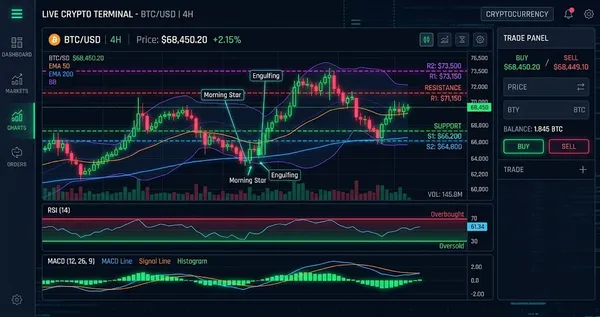
Bitcoin held the USD 60,000 level for the third consecutive test before recovering to approximately USD 63,500 during the week of June 9 to 16, 2026. The 1-year MVRV ratio moved into negative territory, a zone that has historically coincided with low-risk accumulation windows. Social media bullish commentary volume overtook bearish commentary for the first time in roughly three weeks, according to Santiment.
Two additional catalysts validated specific narratives independently this week. World ID 4.0 launched with expanded partnerships, sending WLD up 11% in a single session and moving the proof-of-humanity thesis from concept to price-driven. Jito's JTO token gained 28% in a day after the JTX platform announced it would route 80% of protocol revenue to token holders, providing direct on-chain cash-flow verification for the real-yield thesis.
The macro backdrop has not resolved. Social discussion of inflation reached its highest level since mid-March 2026 the same week, pointing to persistent macro headwinds. The consensus framing from Santiment and multiple on-chain data sources is that current conditions are consistent with an oversold relief rally, not a confirmed new uptrend phase. Accumulation context remains valid; cycle reversal signaling does not.
What to Watch
- SPCX on Solana via Backpack Securities: watch liquidity depth and custodian audit disclosures as the product scales beyond the initial SpaceX IPO demand spike
- Robinhood Chain mainnet timeline: the Arbitrum L2 public testnet launched in February 2026 with a 500-token target by year-end; regulatory delays in EU and EEA could reprice HOODX
- JTO on-chain revenue distribution: JTX routes 80% of Jito MEV infrastructure fees to token holders; actual protocol revenue data will confirm or undermine the real-yield thesis in real time
- DeFAI agent TVL on Meteora and Jupiter: the ninefold sector market cap growth is denominated in token price, not assets under management; tracking actual capital managed by autonomous agents is the next differentiating metric
Ready to start trading?
Trade on Bitget Try CoinTech2uAffiliate links — we may earn a commission at no extra cost to you.
Frequently Asked Questions
What is a tokenized stock and how does it differ from a regular brokerage account?
A tokenized stock is an on-chain token backed 1:1 by a real share held at a regulated custodian. Unlike a brokerage account, tokenized stocks trade 24 hours a day seven days a week, can be self-custodied in a crypto wallet, and can be used as collateral or combined with DeFi protocols. As of mid-2026, major issuers include Backed Finance issuing xStocks, Dinari issuing dShares, and Robinhood issuing products for EU and EEA users. Most products are not available to US retail investors in their current regulated form.
What is DeFAI and which tokens are associated with the sector?
DeFAI combines DeFi and autonomous AI agents into systems where software executes on-chain financial strategies such as liquidity management, yield optimization, and position rebalancing without human input between cycles. The broader AI crypto sector has grown from approximately USD 3.2 billion to nearly USD 30 billion in market cap over the past year. Infrastructure-layer tokens include TAO, FET, and NEAR. Application-layer DeFAI tokens include Virtuals Protocol and AI Rig Complex. CoinGecko tracks over 150 active DeFAI projects as of June 2026.
Does Bitcoin's recovery above USD 60,000 in June 2026 signal a new bull market?
On-chain data and sentiment analysis as of June 2026 points to an oversold relief bounce rather than a confirmed trend reversal. Bitcoin held USD 60,000 through three consecutive tests before recovering to roughly USD 63,500, and the 1-year MVRV ratio entered negative territory, historically a low-risk accumulation zone. However, inflation-related social discussion reached a three-month high the same week. Santiment and multiple on-chain data providers classify current conditions as consistent with accumulation positioning, not a cycle breakout.