What Are Liquid Staking Tokens (LSTs)?
Earn staking rewards while keeping your assets liquid and composable across DeFi Liquid staking tokens have become one of the most important building blocks in decentralized finance, solving a fundamental tradeoff that plagued proof-of-stake networks since their inception.
What Are Liquid Staking Tokens (LSTs)?
Earn staking rewards while keeping your assets liquid and composable across DeFi
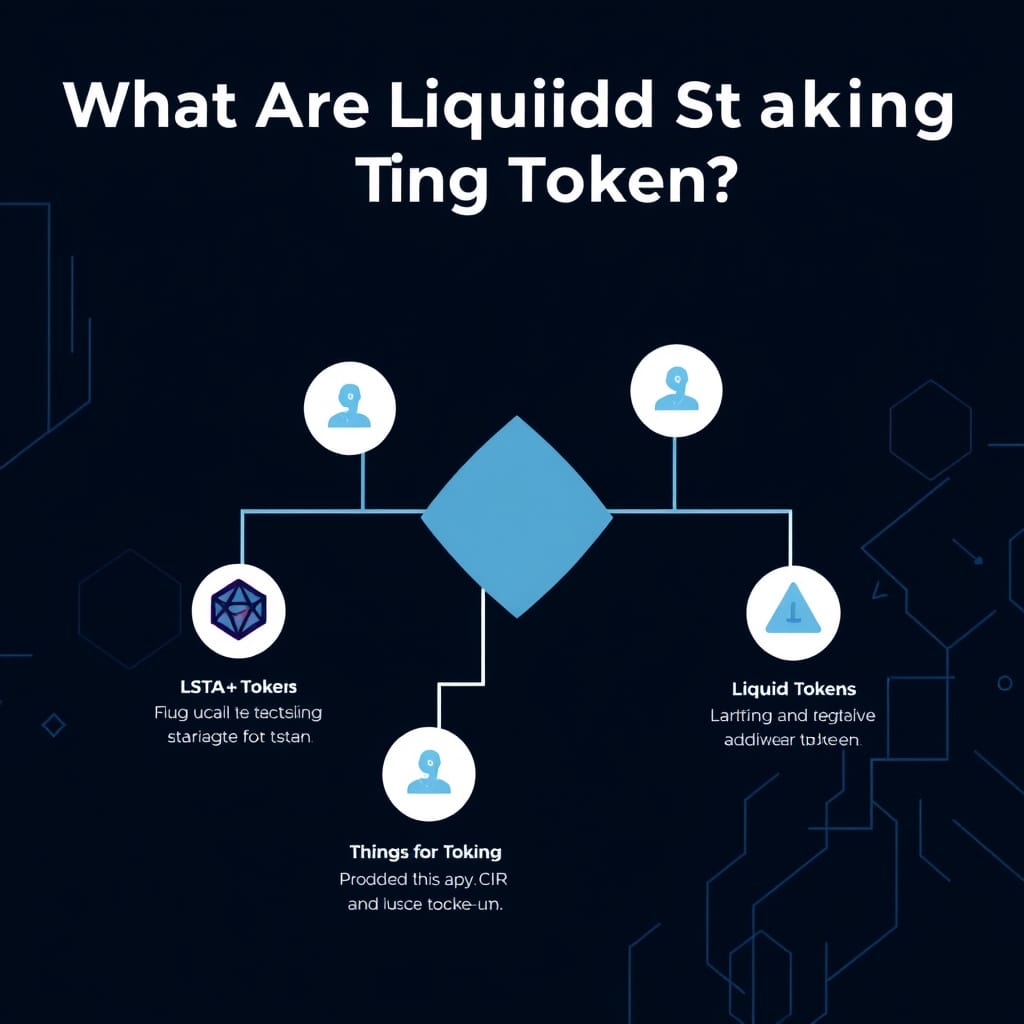
Liquid staking tokens have become one of the most important building blocks in decentralized finance, solving a fundamental tradeoff that plagued proof-of-stake networks since their inception. Traditionally, staking required locking your tokens for extended periods, sacrificing liquidity and the ability to participate in DeFi. Liquid staking protocols issue derivative tokens representing your staked position, allowing you to earn staking rewards while simultaneously using that capital across lending, borrowing, and trading protocols.
By 2026, liquid staking has grown into a category managing over 50 billion dollars in staked assets across multiple chains. This guide explains how liquid staking works, compares the leading protocols, examines the risks involved, and shows you how to maximize the utility of your staked capital through DeFi composability.
Step-by-Step Guide
Step 1
How Liquid Staking Works
When you deposit ETH or another proof-of-stake token into a liquid staking protocol, the protocol stakes your tokens with validators on your behalf and issues you a receipt token, the liquid staking token or LST. This LST represents your claim on the underlying staked assets plus any rewards earned. As validators earn staking rewards, the value of your LST appreciates relative to the base asset, reflecting your share of the accumulated yield.
There are two main models for how LSTs track rewards. Rebasing tokens like Lido stETH automatically increase the number of tokens in your wallet to reflect rewards. Value-accruing tokens like Rocket Pool rETH maintain a fixed balance but increase in price relative to ETH over time. Both models deliver the same economic outcome, but value-accruing tokens are generally easier to integrate with DeFi protocols because the balance does not change unexpectedly.
Step 2
Major Liquid Staking Protocols in 2026
Lido remains the largest liquid staking protocol by total value staked, issuing stETH on Ethereum with a market share that has stabilized around 28 percent of all staked ETH following community-driven efforts to reduce concentration risk. Rocket Pool offers rETH with a more decentralized validator set, requiring only 8 ETH to run a minipool alongside a bond. Coinbase cbETH provides an institutional-grade option with deep centralized exchange liquidity.
Beyond Ethereum, liquid staking has expanded to nearly every major proof-of-stake chain. Jito and Marinade lead on Solana with jitoSOL and mSOL respectively, while protocols like Stride serve the Cosmos ecosystem. The competition has driven staking commissions down to between 5 and 10 percent of rewards, and most protocols have implemented distributed validator technology to reduce single-operator risk. When choosing a protocol, evaluate the validator set diversity, commission rate, smart contract audit history, and DeFi integration depth.
Step 3
Using LSTs in DeFi
The primary advantage of liquid staking is the ability to use your staked position as productive collateral across DeFi. You can deposit stETH or rETH as collateral on Aave or Morpho to borrow stablecoins, effectively maintaining your staking exposure while unlocking liquidity. You can provide LST liquidity on Curve, Balancer, or Uniswap to earn trading fees on top of your staking yield. You can even use LSTs as collateral to mint decentralized stablecoins on protocols like Maker.
The compounding effect of layering DeFi strategies on top of staking rewards is powerful. A typical strategy might earn 3 to 4 percent from Ethereum staking, plus 2 to 5 percent from lending or liquidity provision, resulting in a combined yield of 5 to 9 percent on ETH-denominated assets. However, each additional layer introduces smart contract risk, so the incremental yield must be weighed against the compounding probability of an exploit across multiple protocols.
Step 4
Liquid Restaking and EigenLayer
Liquid restaking represents the next evolution of the LST concept. Protocols like EigenLayer allow staked ETH to simultaneously secure additional services called Actively Validated Services (AVSs) beyond the Ethereum base layer, earning extra rewards in the process. Liquid restaking tokens or LRTs from protocols like Ether.fi (eETH), Renzo (ezETH), and Puffer (pufETH) give you a tradeable token representing your restaked position.
While restaking can boost yields by an additional 2 to 6 percent above base staking rewards, it introduces meaningful additional risk. Your staked ETH is now subject to slashing conditions from both Ethereum consensus and the AVSs you have opted into. If an AVS operates incorrectly and triggers a slashing event, you could lose a portion of your staked ETH. Evaluate each AVS carefully and understand the specific slashing conditions before committing capital to liquid restaking protocols.
Step 5
Risks of Liquid Staking Tokens
Smart contract risk is the most fundamental concern with liquid staking. The protocol smart contracts hold billions of dollars in staked assets, making them high-value targets for exploits. While leading protocols like Lido and Rocket Pool have undergone extensive auditing and operated without major incidents, the possibility of a critical vulnerability can never be eliminated entirely. Diversifying across multiple LST protocols reduces your exposure to any single contract failure.
LSTs can also trade at a discount to their underlying value during periods of market stress, creating a depeg risk. This occurred with stETH during the 2022 bear market when heavy selling pressure pushed it to a 5 percent discount from ETH. While the peg eventually recovered, holders who needed to exit during the depeg realized losses. Validator slashing risk, though rare, can also reduce the value of LSTs if the protocol validators behave maliciously or suffer operational failures.
Step 6
Getting Started with Liquid Staking
To begin liquid staking on Ethereum, visit the official website of your chosen protocol, such as Lido, Rocket Pool, or Coinbase, and connect your wallet. Deposit your ETH and receive the corresponding LST in return. The minimum deposit is typically zero point one ETH or less, making it accessible to all investors. The staking rewards begin accruing immediately and are reflected in your LST value continuously.
After receiving your LST, decide whether to hold it for passive staking yield or deploy it into DeFi for additional returns. If this is your first time, simply holding the LST is the safest approach while you observe how the rewards accumulate and the token price tracks the underlying. As you become more comfortable, you can explore depositing the LST as collateral on lending platforms or providing liquidity in LST trading pools to enhance your yield.
Tips & Best Practices
- Diversify your liquid staking across at least two or three protocols to reduce smart contract risk, splitting your position between Lido, Rocket Pool, and one other provider.
- Check the LST trading discount or premium before purchasing on secondary markets. If stETH is trading at a 1 percent discount to ETH, buying on the market is cheaper than staking directly.
- When using LSTs as collateral for borrowing, maintain a conservative loan-to-value ratio below 60 percent to protect against liquidation from temporary LST price deviations.
- Monitor the validator set composition and slashing history of your chosen liquid staking protocol regularly, as changes in operator quality directly affect your risk profile.
Important: Liquid staking introduces multiple layers of risk beyond simply holding the underlying asset. You are exposed to smart contract vulnerabilities in the staking protocol, operational risks from the validator set, potential depegging during market stress, and governance risks if the protocol is controlled by a small group of token holders. Never stake more than you can afford to have locked or devalued during a crisis, and be particularly cautious with liquid restaking where slashing conditions from multiple AVSs compound the risk profile significantly.
Frequently Asked Questions
Can I unstake my LST and get my original ETH back?
Yes, all major liquid staking protocols support withdrawals where you can burn your LST and receive the underlying ETH plus accumulated rewards. On Ethereum, the withdrawal process typically takes between one and five days depending on the protocol and the Ethereum exit queue length. You can also sell your LST directly on a decentralized exchange for immediate liquidity, though the market price may differ slightly from the redemption value.
What happens to my LST if the protocol gets hacked?
If the liquid staking protocol smart contracts are exploited, the LST could lose some or all of its value because the claim on the underlying staked assets flows through those contracts. This is the primary risk of liquid staking versus running your own validator. Established protocols mitigate this through extensive auditing, bug bounties, and insurance funds, but the risk cannot be completely eliminated.
Is liquid staking better than solo staking?
Liquid staking offers convenience, lower minimum requirements, and DeFi composability that solo staking cannot match. Solo staking provides maximum decentralization contribution and avoids protocol risk entirely. For most users, liquid staking is the practical choice. For those with 32 ETH and the technical ability to run a validator, solo staking is the gold standard for security and network health, though you sacrifice the liquidity benefits.
CryptoTakeProfit Research Team
Our team of analysts and traders covers the crypto market daily. We combine on-chain data, technical analysis, and fundamental research to bring you actionable insights.
Disclaimer: This article is for informational purposes only and does not constitute financial advice. Cryptocurrency investments carry significant risk. Always do your own research and never invest more than you can afford to lose. This article may contain affiliate links.